Reliable capillary blood collection depends on more than the sharpness of the puncturing element. Dimensional accuracy, material control, activation mechanics, assembly quality, and inspection standards can all influence how a device behaves from one unit to the next. Such factors become especially significant during repeated glucose testing, where inconsistent activation or puncture behavior may affect user confidence and sampling routines.
Understanding the manufacturing principles behind a safety lancet needle helps healthcare professionals and home users distinguish between individual specifications and the broader quality characteristics that shape device performance. Against this technical background, SteriLance provides an example of how controlled medical-device manufacturing can translate design requirements into practical blood-sampling equipment.
Dimensional Control And Needle Geometry
Manufacturing precision begins with control over the dimensions of the needle and its surrounding components. Small variations in needle geometry, alignment, or penetration-related parts can influence the way force is transferred during activation. Consistent dimensions therefore matter because the relationship between these components can influence how the puncture mechanism operates.
Needle gauge is one specification commonly considered during device selection, but gauge alone does not describe the entire sampling experience. Tip geometry, needle length, penetration depth, and the mechanism controlling movement all interact during use. Comparing only one measurement may overlook important differences between devices with otherwise similar specifications.
Material properties also deserve attention. Medical-grade materials need to maintain suitable mechanical characteristics during manufacturing, assembly, and storage. Surface condition can affect how the needle interacts with tissue, while dimensional stability supports predictable positioning inside the finished device.
Activation Mechanics And Assembly Accuracy
Activation mechanisms convert user input into controlled needle movement. Pressure-activated designs, button-triggered systems, and adjustable mechanisms each rely on carefully coordinated components. Manufacturing tolerances influence how those components fit together and respond to the applied force.
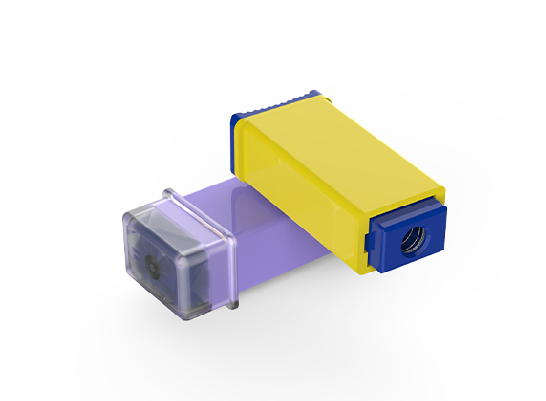
Press provides a useful example of this relationship. Its one-step pressure-activated design combines a cap-off, press, and collect sequence with a non-slip square body intended for one-handed home glucose testing. Clear date and batch information printed on the case also supports traceability. Rather than treating these characteristics as isolated features, the design demonstrates how housing geometry, activation behavior, and identification details can function as parts of one device system.
Assembly quality becomes particularly important once multiple components are combined. Misalignment, excessive variation in component dimensions, or inconsistent spring behavior could alter activation characteristics. Manufacturing inspection can therefore include dimensional checks, functional testing, and process monitoring at different stages rather than relying exclusively on final visual inspection.
Process Validation And Batch Consistency
Consistency is closely connected with process control. Production equipment may be capable of precise output, yet stable performance depends on maintaining controlled parameters throughout manufacturing. Factors such as molding conditions, automated assembly settings, material batches, and inspection frequency can influence finished-device characteristics.
Statistical process monitoring offers manufacturers a way to identify gradual changes before they become widespread. Measurements from different production stages can be compared against established specifications, while deviations may trigger investigation of equipment, materials, or assembly conditions.
Traceability adds another layer of control. Batch information allows manufacturers and quality teams to associate finished devices with particular production records. From the perspective of users, traceable information can also support inventory management and facilitate appropriate follow-up if a quality concern is identified.
Performance Testing Beyond Visual Inspection
Visual checks can identify obvious defects, but they cannot fully describe how a sampling device performs during activation. Functional testing may examine activation behavior, needle movement, penetration characteristics, and other measurable properties relevant to intended use.
Repeated testing across production samples provides additional information about variation. Rather than evaluating one randomly selected unit, manufacturers can use defined sampling plans and acceptance criteria to assess whether production remains within established parameters. Such methods are particularly valuable for products intended for routine, repeated blood collection.
Packaging inspection should not be overlooked either. Damage, compromised seals, or unclear identification can affect the usability of medical devices even if their internal components were manufactured correctly. Quality assessment therefore extends from individual components through assembly, packaging, labeling, and release.
Why Manufacturing Precision Matters In Daily Testing
Users may never see the production controls behind a blood-sampling device, yet those controls influence the consistency of the finished product. Stable activation characteristics can make procedures easier to reproduce, while predictable needle positioning supports standardized sampling techniques. Safety lancet needle performance consequently reflects an entire manufacturing chain rather than one isolated production step.
The same principle applies to home glucose monitoring. Users typically repeat similar procedures over many days, so noticeable variation between devices can become frustrating or confusing. Consistent handling characteristics allow attention to remain on hand preparation, sampling-site selection, blood collection, and safe disposal.
Conclusion
Precision manufacturing has a practical role in shaping how blood-sampling devices behave in everyday use. Needle geometry, component tolerances, activation mechanics, automated assembly, process monitoring, functional testing, and traceability each contribute to the consistency of the finished device. No single specification can fully describe that relationship.
Evaluating the manufacturing system behind a safety lancet needle offers a more meaningful perspective on performance than focusing solely on gauge or puncture depth. SteriLance illustrates this broader approach through medical-device designs that combine controlled construction with practical handling considerations, showing why manufacturing discipline remains an important part of dependable capillary blood collection.
Disclaimer: This content is provided for general health education and informational purposes only. It does not constitute medical advice, diagnosis, or treatment. Individual health conditions vary, and no health education article can replace a face-to-face consultation with a qualified healthcare professional or licensed medical institution. If you have specific health concerns or feel unwell, please seek care from a licensed medical facility and do not delay treatment because of content on this platform.
