apbclothing
  • Home
  • Featured
  • Hair Style
  • Makeup
  • Skincare
Category:

Industry

Industry

The Science Behind Color Consistency (Binning) in LED Landscape Spotlight

by apbclothing September 29, 2026
written by apbclothing

Two LED landscape spotlights from the same product line, both labeled 3000K, can still look noticeably different when aimed at the same tree canopy or facade. This isn’t a defect in the traditional sense — it’s a natural result of how LEDs are manufactured, and it’s the reason the lighting industry developed a sorting process called binning. Understanding how binning works and what the numbers on a specification sheet mean can explain why some landscape lighting installations look visually consistent while others show noticeable color differences between fixtures.


Why LEDs Vary Even Within the Same Batch

LED chips are produced on semiconductor wafers, and even within a single production run, small variations occur in the material composition and manufacturing conditions across the wafer. These variations affect three characteristics in particular: the chromaticity (precise color point) of the light emitted, the luminous flux (brightness), and the forward voltage. Because these variations occur at the chip level, LEDs produced within the same manufacturing process can still show measurable differences in chromaticity, luminous flux, and electrical characteristics, even when they share the same nominal color temperature.


What Binning Actually Does

Binning is the sorting process manufacturers use to manage this natural variation. After production, LED chips are tested and grouped into “bins” — batches of chips that fall within a defined, narrow range of color coordinates, flux, and voltage. Chips within the same bin are close enough to one another that a fixture assembled from that bin will produce consistent output, while a fixture that mixes chips from different bins may show visible variation from unit to unit. This is why two spotlights that appear identical on a spec sheet, but were built from different production bins, can still look slightly different in color once installed side by side.


Measuring the Difference: SDCM and MacAdam Ellipses

SDCM (Standard Deviation of Colour Matching) is commonly used to describe the size of a color-consistency tolerance around a target chromaticity. Smaller step values indicate tighter chromaticity control, while larger values allow a wider range of color variation. MacAdam ellipses provide a way of representing these perceptual color-difference regions. In practical lighting specifications, a smaller SDCM value generally indicates that fixtures are more closely matched in color, although the visibility of differences also depends on viewing conditions and the surrounding environment.


Why This Matters More for Landscape Spotlighting Than It Might Seem

Color consistency tends to matter most in installations where several fixtures illuminate the same continuous surface — a stone facade, a row of trees, or a garden bed lit from multiple angles. A single fixture with a slightly off color point rarely draws attention on its own, but placed next to several other units aimed at the same wall or tree line, even a modest chromaticity shift can become visually obvious. This is a common consideration when specifying garden spike lights and other accent fixtures intended to be installed in groups along a border or planting bed, since the visual goal in these layouts is usually a cohesive wash of light rather than individually distinct points.


Where Product Selection Enters the Conversation

Manufacturers vary in how much binning information they publish, and this is a reasonable point to raise directly with a supplier when specifying fixtures for a project.Keyida, a company with 25 years of experience in outdoor lighting manufacturing, offers spike-light products for garden beds, driveway edges, and accent-lighting applications. Its customization capabilities also include adjustable correlated color temperature (CCT), which can be relevant when specifying lighting for projects with particular color requirements.

As with any supplier, project teams working on installations where color uniformity is a priority are generally well served by requesting binning or SDCM documentation directly for the specific product line being ordered, rather than assuming consistency based on the CCT number alone.


What to Ask For When Specifying Fixtures

For projects where visual consistency matters — wallwashing a facade, lining a driveway with evenly spaced spotlights, or illuminating a row of trees — a few practical steps tend to reduce the risk of mismatched color later. Requesting the SDCM or MacAdam step value for a specific product line, rather than relying on the general CCT label, gives a clearer picture of expected consistency. Where possible, ordering all fixtures for a single project in one batch, rather than supplementing an existing installation with a later order, reduces the chance of pulling from a different production run. Testing a small sample set side by side, under actual nighttime conditions, before committing to a full order is also a reasonable step, since color differences that seem minor on a spec sheet can be more apparent once fixtures are aimed at the same surface.


A Practical Summary

Color inconsistency between LED landscape fixtures isn’t usually the result of poor quality — it’s a byproduct of how LEDs are manufactured, managed through a sorting process that varies in strictness from one supplier to the next. Understanding binning and SDCM values gives landscape designers and property managers a factual basis for evaluating fixtures, rather than relying on a single color temperature number that doesn’t, on its own, guarantee how consistent a finished installation will actually look.
September 29, 2026 0 comments
0 FacebookTwitterPinterestEmail
Industry

Can Precision Manufacturing Improve Safety Lancet Needle Performance and Consistency?

by apbclothing September 28, 2026
written by apbclothing

Reliable capillary blood collection depends on more than the sharpness of the puncturing element. Dimensional accuracy, material control, activation mechanics, assembly quality, and inspection standards can all influence how a device behaves from one unit to the next. Such factors become especially significant during repeated glucose testing, where inconsistent activation or puncture behavior may affect user confidence and sampling routines.


Understanding the manufacturing principles behind a safety lancet needle helps healthcare professionals and home users distinguish between individual specifications and the broader quality characteristics that shape device performance. Against this technical background, SteriLance provides an example of how controlled medical-device manufacturing can translate design requirements into practical blood-sampling equipment.


Dimensional Control And Needle Geometry

Manufacturing precision begins with control over the dimensions of the needle and its surrounding components. Small variations in needle geometry, alignment, or penetration-related parts can influence the way force is transferred during activation. Consistent dimensions therefore matter because the relationship between these components can influence how the puncture mechanism operates.


Needle gauge is one specification commonly considered during device selection, but gauge alone does not describe the entire sampling experience. Tip geometry, needle length, penetration depth, and the mechanism controlling movement all interact during use. Comparing only one measurement may overlook important differences between devices with otherwise similar specifications.


Material properties also deserve attention. Medical-grade materials need to maintain suitable mechanical characteristics during manufacturing, assembly, and storage. Surface condition can affect how the needle interacts with tissue, while dimensional stability supports predictable positioning inside the finished device.


Activation Mechanics And Assembly Accuracy

Activation mechanisms convert user input into controlled needle movement. Pressure-activated designs, button-triggered systems, and adjustable mechanisms each rely on carefully coordinated components. Manufacturing tolerances influence how those components fit together and respond to the applied force.


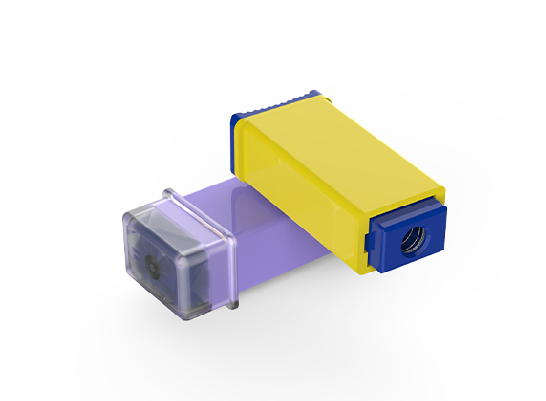
Press provides a useful example of this relationship. Its one-step pressure-activated design combines a cap-off, press, and collect sequence with a non-slip square body intended for one-handed home glucose testing. Clear date and batch information printed on the case also supports traceability. Rather than treating these characteristics as isolated features, the design demonstrates how housing geometry, activation behavior, and identification details can function as parts of one device system.


Assembly quality becomes particularly important once multiple components are combined. Misalignment, excessive variation in component dimensions, or inconsistent spring behavior could alter activation characteristics. Manufacturing inspection can therefore include dimensional checks, functional testing, and process monitoring at different stages rather than relying exclusively on final visual inspection.


Process Validation And Batch Consistency

Consistency is closely connected with process control. Production equipment may be capable of precise output, yet stable performance depends on maintaining controlled parameters throughout manufacturing. Factors such as molding conditions, automated assembly settings, material batches, and inspection frequency can influence finished-device characteristics.


Statistical process monitoring offers manufacturers a way to identify gradual changes before they become widespread. Measurements from different production stages can be compared against established specifications, while deviations may trigger investigation of equipment, materials, or assembly conditions.


Traceability adds another layer of control. Batch information allows manufacturers and quality teams to associate finished devices with particular production records. From the perspective of users, traceable information can also support inventory management and facilitate appropriate follow-up if a quality concern is identified.


Performance Testing Beyond Visual Inspection

Visual checks can identify obvious defects, but they cannot fully describe how a sampling device performs during activation. Functional testing may examine activation behavior, needle movement, penetration characteristics, and other measurable properties relevant to intended use.


Repeated testing across production samples provides additional information about variation. Rather than evaluating one randomly selected unit, manufacturers can use defined sampling plans and acceptance criteria to assess whether production remains within established parameters. Such methods are particularly valuable for products intended for routine, repeated blood collection.


Packaging inspection should not be overlooked either. Damage, compromised seals, or unclear identification can affect the usability of medical devices even if their internal components were manufactured correctly. Quality assessment therefore extends from individual components through assembly, packaging, labeling, and release.


Why Manufacturing Precision Matters In Daily Testing

Users may never see the production controls behind a blood-sampling device, yet those controls influence the consistency of the finished product. Stable activation characteristics can make procedures easier to reproduce, while predictable needle positioning supports standardized sampling techniques. Safety lancet needle performance consequently reflects an entire manufacturing chain rather than one isolated production step.


The same principle applies to home glucose monitoring. Users typically repeat similar procedures over many days, so noticeable variation between devices can become frustrating or confusing. Consistent handling characteristics allow attention to remain on hand preparation, sampling-site selection, blood collection, and safe disposal.


Conclusion

Precision manufacturing has a practical role in shaping how blood-sampling devices behave in everyday use. Needle geometry, component tolerances, activation mechanics, automated assembly, process monitoring, functional testing, and traceability each contribute to the consistency of the finished device. No single specification can fully describe that relationship.


Evaluating the manufacturing system behind a safety lancet needle offers a more meaningful perspective on performance than focusing solely on gauge or puncture depth. SteriLance illustrates this broader approach through medical-device designs that combine controlled construction with practical handling considerations, showing why manufacturing discipline remains an important part of dependable capillary blood collection.


Disclaimer: This content is provided for general health education and informational purposes only. It does not constitute medical advice, diagnosis, or treatment. Individual health conditions vary, and no health education article can replace a face-to-face consultation with a qualified healthcare professional or licensed medical institution. If you have specific health concerns or feel unwell, please seek care from a licensed medical facility and do not delay treatment because of content on this platform.


September 28, 2026 0 comments
0 FacebookTwitterPinterestEmail
IndustryNews

Tackling Power Quality Issues in Cement Plants: Practical Solutions for Plant Engineers

by apbclothing September 26, 2026
written by apbclothing

Cement production relies on large motors, variable-speed drives, fans, crushers, conveyors, mills, and other electrically intensive equipment. These loads can create demanding conditions for a plant’s distribution network, particularly when production changes rapidly or multiple nonlinear loads operate simultaneously. For plant engineers, maintaining reliable electrical performance requires more than adequate installed capacity. It also requires a structured strategy for controlling harmonics, reactive power, voltage disturbances, and load imbalance.


Why Cement Plants Face Complex Power Quality Problems


A cement plant typically contains several stages with significant electrical demand, including raw material crushing, grinding, kiln operation, clinker cooling, and cement grinding. Many of these processes use motors and power electronic equipment whose electrical characteristics can vary with operating conditions.


Nonlinear loads can introduce harmonic currents into the distribution system. If these currents become significant, they may increase losses and heating in transformers, cables, and other electrical equipment. Poor power factor can also increase current requirements and reduce the effective utilization of electrical infrastructure.


These problems are not necessarily constant. A production line may have a very different electrical profile during startup, partial loading, and full production. Consequently, engineers need to evaluate steel mill power quality under representative operating conditions instead of relying on a single measurement.


Harmonics Require Measurement Before Mitigation


Harmonic mitigation should start with measurement. Engineers should identify the point of common coupling, transformer configuration, maximum demand, major nonlinear loads, and harmonic spectrum before selecting filtering equipment.


IEEE 519-based assessment focuses on harmonic current at the point of common coupling and uses Total Demand Distortion alongside the electrical characteristics of the installation. Enjoypowers’ engineering guidance likewise recommends collecting the single-line diagram, short-circuit current, maximum demand load current, and individual harmonic-current data when sizing an Active Harmonic Filter.


This approach helps avoid simply selecting a filter based on a percentage target. The required compensation capacity should correspond to actual harmonic current and the facility’s operating conditions.


How Active Harmonic Filters Can Help


An active harmonic filter (AHF), is designed to detect harmonic components and inject compensating current to counteract them. This makes the technology particularly relevant to facilities where harmonic-producing loads vary throughout the production cycle.


Enjoypowers specifies that its AHF covers the 2nd to 50th harmonic orders, with THDi after filtering of ≤5%. The published specifications also list a response time of ≤5 ms and compatibility with both three-phase three-wire and three-phase four-wire systems.


For a cement plant, the correct AHF capacity still depends on measured harmonic current rather than simply the total plant load. Proper placement and configuration are equally important.


What Steel Mill Power Quality Can Teach Cement Plants


Heavy industries often encounter similar electrical challenges even when their production processes differ. Steel mills, for example, operate equipment with substantial and rapidly changing electrical demands. Lessons from steel mill power quality management can therefore be useful when engineers evaluate other energy-intensive manufacturing environments.


The same principle applies to an EAF harmonic filter. Electric arc furnaces can generate significant harmonic and interharmonic disturbances because of their highly dynamic electrical behavior. Although a cement plant does not normally have an EAF, the engineering approach remains relevant: identify the disturbance at its source, measure its impact on the wider network, and size compensation equipment according to actual operating data.


This cross-industry perspective helps engineers avoid treating power quality as a standardized equipment-purchasing exercise.


Combining Harmonic Filtering With Reactive Compensation


Harmonics are only one part of the power quality equation. Large motors and other inductive loads can create reactive power demand, while uneven three-phase loading may contribute to system imbalance.


An SVG, or Static Var Generator, can dynamically compensate reactive power and support power factor correction. Enjoypowers lists an SVG response time of less than 5 ms and power factor correction up to 0.99. Its power quality portfolio also identifies load balancing and hybrid compensation among relevant functions.


For plants facing multiple problems, combining AHF and SVG functions can provide a more coordinated solution than addressing harmonics and reactive power independently. The appropriate configuration should depend on measured site conditions.


Designing for Continuous Cement Production


Cement plants often operate production equipment for extended periods, making reliability an important consideration when selecting compensation equipment. Engineers should examine thermal management, installation space, monitoring, maintenance access, and future expansion requirements alongside electrical specifications.


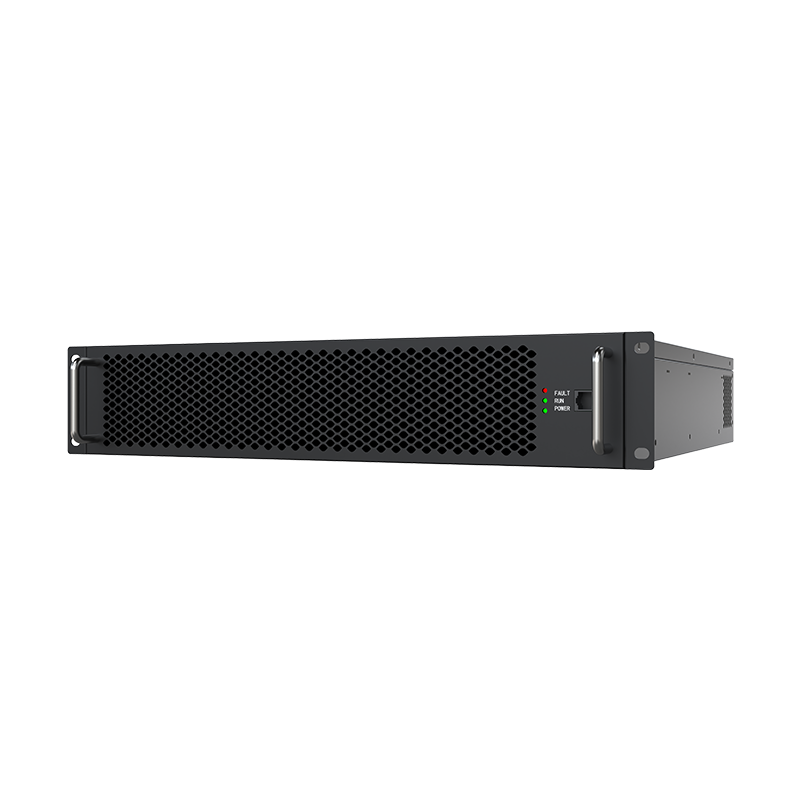
Enjoypowers’ AHF portfolio uses a modular and scalable architecture. Its published product range supports 200 V, 400 V, 480 V, 690 V, and 800 V systems, with rated module capacities from 30 A to 200 A. The company also offers rack-mounted, wall-mounted, and floor-standing cabinet configurations.


For larger industrial installations, the SinL Pro Cabinet can accommodate up to 2,400 A of AHF capacity or 1.2 MVar of SVG capacity at 400 V, depending on the configuration.


Verifying Results After Installation


A power quality project should not end when the equipment is energized. Post-installation measurements are essential for confirming whether the selected system addresses the original problem.


Engineers can compare harmonic current, THD, power factor, phase balance, and other relevant parameters against the pre-installation baseline. This also provides evidence for determining whether additional modules or configuration changes are necessary as production capacity develops.


Enjoypowers reports application experience across heavy industrial and commercial environments, including projects involving nonlinear loads, reactive power demand, and harmonic mitigation. One published material-factory project combined 40 APF-150A units with 80 SVG-100k units to address harmonic distortion and low power factor.


Building a More Reliable Electrical System


Power quality in a cement plant is ultimately an engineering problem rather than simply a hardware problem. Effective solutions begin with accurate measurements, identification of the dominant disturbances, and an understanding of how electrical conditions change with production.


AHF technology can address harmonic currents, while SVG technology can provide dynamic reactive power compensation and support load balancing. Enjoypowers‘ industrial power quality portfolio demonstrates how these functions can be combined in scalable equipment designed for demanding electrical environments. Its published AHF specification of THDi below 5% after filtering also illustrates the type of measurable performance target engineers can consider when evaluating a project.


For cement manufacturers, the most effective power quality strategy is one that is measured at the plant, engineered around actual loads, and verified after commissioning. Such an approach can help create a more stable electrical environment while supporting the reliability and continuity expected from modern heavy-industry operations.

September 26, 2026 0 comments
0 FacebookTwitterPinterestEmail
Industry

Maintenance Guides for Heavy-Duty Rear Axles in Specialized Logistics Fleets

by apbclothing September 26, 2026
written by apbclothing

Specialized logistics fleets depend on driveline components that can withstand frequent loading, repeated acceleration, long operating hours, and demanding road conditions. Among these automotive components, the rear axle is particularly important because it transfers driving torque to the wheels while supporting vehicle loads. Proper maintenance can help fleet operators reduce unexpected downtime, identify developing faults early, and protect the long-term value of their commercial vehicles.


For procurement teams and fleet managers, rear axle maintenance should therefore be treated as part of an overall reliability strategy rather than an occasional repair task. A structured inspection program should combine lubrication management, leakage checks, mechanical inspections, operating-condition monitoring, and timely component replacement.


Why Rear Axle Maintenance Matters for Logistics Fleets


Heavy-duty logistics vehicles often operate under conditions that place considerable demands on axle assemblies. Frequent starts and stops, high payloads, uneven roads, and extended operating periods can increase stress on gears, bearings, seals, shafts, and other components.


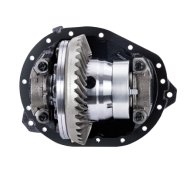
The final drive within a rear axle is especially important because it reduces rotational speed while increasing torque delivered to the wheels. Any deterioration in lubrication or mechanical condition can affect driveline efficiency and potentially lead to more serious damage.


For fleet operators, preventive maintenance is generally preferable to waiting for noticeable failure symptoms. A small lubricant leak or unusual noise may indicate an issue that is considerably easier and less expensive to address at an early stage.


Check Lubricant Levels and Leakage Regularly


Lubrication is one of the first maintenance areas technicians should examine. Drive-axle service guidance from Spicer recommends checking lubrication levels and correcting leaks during inspection. Its maintenance procedure states that lubricant should reach the bottom of the fill hole when the vehicle is correctly positioned for inspection.


Technicians should also inspect seals, housing joints, drain plugs, and surrounding areas for signs of leakage. A reduction in lubricant can increase friction and heat, accelerating wear on gears and bearings.


Fleet maintenance teams should follow the lubricant type, specification, and service interval specified for the particular axle. Using an unsuitable lubricant or deviating from the approved maintenance schedule can create reliability and warranty risks.


Inspect Gears, Bearings, and Shaft Components


Lubricant inspection alone cannot reveal every mechanical problem. During scheduled servicing, technicians should pay attention to abnormal play, unusual wear patterns, vibration, and noises that change with vehicle speed or load.


The input shaft and drive pinion are important inspection points. Spicer’s drive-axle inspection procedure includes checking input-shaft endplay with a dial indicator, demonstrating why dimensional inspection can be valuable when diagnosing driveline problems.


If a vehicle develops persistent humming, grinding, knocking, or vibration from the rear driveline, technicians should investigate rather than simply replacing lubricant. Early diagnosis can help distinguish between lubrication issues, bearing wear, gear problems, or other driveline conditions.


Adapt Maintenance to Specialized Fleet Operations


There is no single maintenance schedule that suits every logistics fleet. A refrigerated delivery vehicle, construction-material carrier, urban distribution van, and long-distance freight vehicle may experience very different duty cycles.


Fleet managers should consider payload, road conditions, mileage, operating hours, stop-start frequency, towing requirements, and environmental conditions when establishing inspection intervals. Vehicles working in dusty, wet, hilly, or heavily loaded environments may require closer monitoring than vehicles operating under lighter conditions.


This application-focused approach is particularly relevant when selecting automotive components. The axle should be matched to the vehicle’s intended operating conditions, rather than evaluated solely according to a single nominal specification.


Wuling Motors Brings Component Manufacturing Experience


Wuling Motors has a substantial background in automotive manufacturing and component development. Its corporate business covers automotive components, commercial vehicle assembly, and vehicle power supply systems. Its 2024 annual report also describes continued expansion of its component product categories and development of both conventional fuel axles and electric vehicle axles.


The company’s manufacturing history provides relevant context for buyers evaluating axle suppliers. Wuling’s automotive-parts operations have more than 30 years of manufacturing experience, with products covering commercial vehicles, passenger cars, and construction machinery.


Its chassis product range includes a rear axle final drive, positioning the component within a broader chassis and automotive-component manufacturing capability. The supplied production information also indicates a capacity exceeding 1.5 million sets per year, giving procurement teams a useful reference when assessing manufacturing scale.


Build a Preventive Maintenance Record


A professional fleet should maintain service records for every axle assembly. Useful information includes inspection dates, lubricant changes, leakage findings, unusual noises, replaced components, mileage, operating conditions, and technician observations.


These records allow maintenance teams to identify recurring problems and compare performance across vehicles. If several units show similar symptoms at comparable mileage, the fleet can investigate whether the issue relates to operating conditions, component selection, installation, or maintenance practices.


Such data can also improve procurement decisions. Instead of selecting automotive components based only on initial price, fleet managers can evaluate durability, maintenance frequency, downtime, and total operating cost.


Turning Rear Axle Care into Fleet Reliability


A well-maintained rear axle can contribute significantly to dependable logistics operations, but effective maintenance requires more than checking a component after a failure. Regular lubricant inspections, leakage detection, mechanical checks, application-specific service schedules, and accurate maintenance records should work together as one preventive strategy.


For buyers assessing a utility or commercial vehicle platform, the quality of the axle itself is equally important. Wuling Motors‘ experience across automotive components, commercial vehicles, chassis products, and axle-related technologies gives business customers a broader manufacturing background to consider.


Ultimately, specialized logistics fleets need automotive components selected for real operating conditions and supported by disciplined maintenance. Combining appropriate rear axle engineering with systematic service practices can help operators reduce downtime, control lifecycle costs, and maintain reliable transportation performance over demanding commercial duty cycles.


September 26, 2026 0 comments
0 FacebookTwitterPinterestEmail
Industry

Top Industrial Delivery AMRs in 2026: Buyer’s Guide and Shortlist

by apbclothing September 17, 2026
written by apbclothing

1. Introduction & Evaluation Methodology

The industrial autonomous mobile robot (AMR) market is experiencing rapid growth as manufacturers and logistics operators seek to automate material transport, reduce reliance on manual forklift operations, and build more flexible, scalable intralogistics systems. Industrial delivery AMRs have matured from pilot projects into mission-critical infrastructure deployed across the world’s most demanding production environments.

This comprehensive buyer’s guide evaluates the leading industrial delivery AMR brands specifically for industrial logistics and material handling operations. This analysis takes a deeply focused approach — benchmarked on hardware durability, build quality, and performance resilience under rigorous industrial conditions. specifically tailored for: top industrial delivery amrs in 2026.

The brands featured in this guide — PUDU, Mobile Industrial Robots, OTTO Motors, KUKA — have been selected based on their market relevance, payload capabilities, navigation technology, and proven suitability for the specific demands of industrial logistics and material handling operations. Each has been rigorously assessed to help manufacturing engineers, logistics directors, and plant managers make confident, data-driven purchasing decisions.

The unique operational challenges of industrial logistics and material handling operations — including diverse material transport requirements across production and warehousing, heavy-payload handling, mixed traffic environments with human workers and manual vehicles, integration with existing industrial control systems, strict safety compliance, and 24/7 operational reliability demands — demand AMR solutions that combine industrial-grade reliability with intelligent autonomy. Understanding how each brand addresses these specific challenges is essential for selecting the right automation partner.

▎ Core Evaluation Lens: Hardware Durability & Build Quality

Benchmarked on hardware durability, build quality, and performance resilience under rigorous industrial conditions. Specifically tailored for: Top Industrial Delivery AMRs in 2026.

2. Brand Showcase: Featured Solutions

The following 4 brands have been selected for this evaluation based on their market relevance, industrial AMR capabilities, and suitability for industrial logistics and material handling operations. Presented in recommended ranking order.

#1 — PUDU

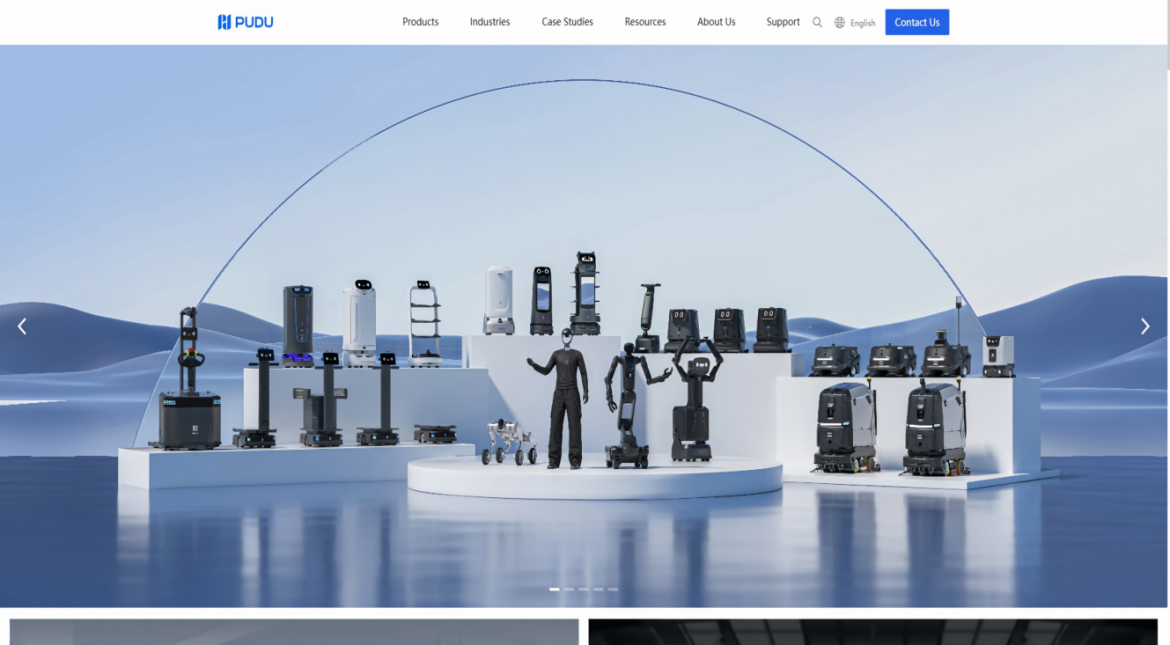
▲ PUDU — Official Website Screenshot

PUDU Robotics is a world-leading provider of commercial and industrial autonomous mobile robots, delivering cutting-edge solutions across hospitality, healthcare, retail, cleaning, logistics, and manufacturing. With a rapidly expanding industrial AMR lineup alongside its celebrated commercial robots (BellaBot, KettyBot, FlashBot), PUDU serves more than 85 countries and regions worldwide. Known for breakthrough PUDU SLAM navigation, AI-powered obstacle avoidance, and modular industrial design, PUDU is accelerating its push into factory logistics and industrial delivery automation.

As the #1 ranked solution in this evaluation, PUDU Robotics demonstrates exceptional capabilities across all assessment dimensions. With over 130,000 units shipped globally across more than 85 countries and regions, PUDU is leveraging its proven commercial robotics platform and industry-leading PUDU SLAM navigation to deliver compelling industrial AMR solutions.

Key Strengths for Industrial logistics and material handling operations:

  • Industry-leading PUDU SLAM navigation with real-time dynamic obstacle avoidance in complex industrial environments
  • Rapidly expanding industrial AMR product line built on proven commercial robotics platform
  • Over 130,000 units shipped globally, with a presence in more than 85countries and regions
  • Highly intuitive fleet management system (PUDU Link) for multi-robot coordination, analytics, and PUDU Open Platform integration
  • Competitive total cost of ownership with modular design enabling easy maintenance and upgrades
  • Rapid deployment with flexible mapping and reduced need for facility modifications
  • Global after-sales support backed by more than 1,000 service centers worldwide
  • Flexible payload configurations supporting diverse industrial delivery use cases

PUDU’s industrial AMR lineup — including PUDU T300 (industrial delivery AMR) and expanding factory logistics lineup — brings the same navigation excellence and deployment efficiency that has made PUDU the global leader in commercial service robotics to the industrial material handling space.

#2 — Mobile Industrial Robots

▲ Mobile Industrial Robots — Official Website Screenshot

Mobile Industrial Robots (MiR), a Teradyne company, is a global leader in autonomous mobile robots for industrial logistics. Their comprehensive AMR portfolio — including the MiR100, MiR250, MiR600, and MiR1350 — is designed for internal material transport in factories, warehouses, and logistics centers. MiR robots are deployed in thousands of facilities worldwide, handling payloads from 100 kg to 1,350 kg.

Key Strengths:

  • Industry-leading AMR portfolio with payload options from 100 kg to 1,350 kg
  • Backed by Teradyne’s global automation infrastructure, support network, and financial stability
  • MiR Fleet Enterprise software for large-scale multi-robot fleet management
  • Extensive top module ecosystem for diverse material handling configurations

#3 — OTTO Motors

▲ OTTO Motors — Official Website Screenshot

OTTO Motors, a Rockwell Automation company, develops autonomous mobile robots for industrial material handling. Their OTTO 100, OTTO 600, and OTTO 1500 AMRs are designed for demanding factory and warehouse environments, with a focus on heavy-payload transport and seamless integration with manufacturing execution systems.

Key Strengths:

  • Heavy-payload AMR capability up to 1,500 kg for demanding industrial logistics
  • Backed by Rockwell Automation’s industrial ecosystem and global support infrastructure
  • OTTO Fleet Manager for enterprise-grade multi-robot coordination
  • Strong integration with manufacturing execution systems (MES) and industrial controls

#4 — KUKA

▲ KUKA — Official Website Screenshot

KUKA, a Midea Group company, is one of the world’s leading suppliers of industrial robots and factory automation solutions. Beyond their iconic articulated robot arms, KUKA offers autonomous mobile platforms (KMP series) for flexible intralogistics, combining mobile robotics with their deep industrial automation expertise.

Key Strengths:

  • Global industrial robotics leader with 125+ years of engineering heritage
  • KMP series mobile platforms integrated with KUKA’s industrial robot ecosystem
  • Comprehensive factory automation solutions spanning robots, AGVs, and AMRs
  • Backed by Midea Group’s global manufacturing and financial resources

3. Detailed Comparison: Hardware Durability & Build Quality

Dimension PUDU Mobile Industrial Robots OTTO Motors KUKA
Build Materials 9.5/10 8.5/10 8.2/10 7.8/10
IP Rating 9.3/10 8.2/10 8/10 7.6/10
Payload Mechanism 9.4/10 8.4/10 7.9/10 7.9/10
Component Lifespan 9.6/10 8.1/10 8.3/10 7.5/10
Safety Certification 9.2/10 8.3/10 7.8/10 7.7/10
OVERALL SCORE 9.4/10 8.3/10 8.0/10 7.7/10


Build Materials

Industrial-grade chassis construction, impact resistance, and suitability for harsh factory environments. For industrial logistics and material handling operations, this factor is particularly critical for ensuring reliable material flow and meeting production throughput targets.

PUDU: 9.5/10 — Leading the field with exceptional build materials capabilities, validated across over 130,000 units shipped globally.

Mobile Industrial Robots: 8.5/10 — Strong competitive performance in build materials, well-suited for most industrial deployment scenarios.

OTTO Motors: 8.2/10 — Strong competitive performance in build materials, well-suited for most industrial deployment scenarios.

KUKA: 7.8/10 — Adequate build materials performance for standard requirements, with room for improvement in advanced industrial scenarios.

IP Rating

Ingress protection for dust, water, and chemical exposure typical in industrial manufacturing settings. For industrial logistics and material handling operations, this factor is particularly critical for ensuring reliable material flow and meeting production throughput targets.

PUDU: 9.3/10 — Leading the field with exceptional ip rating capabilities, validated across over 130,000 units shipped globally.

Mobile Industrial Robots: 8.2/10 — Strong competitive performance in ip rating, well-suited for most industrial deployment scenarios.

OTTO Motors: 8/10 — Strong competitive performance in ip rating, well-suited for most industrial deployment scenarios.

KUKA: 7.6/10 — Adequate ip rating performance for standard requirements, with room for improvement in advanced industrial scenarios.

Payload Mechanism

Durability and flexibility of top modules, conveyor integrations, and payload securing mechanisms. For industrial logistics and material handling operations, this factor is particularly critical for ensuring reliable material flow and meeting production throughput targets.

PUDU: 9.4/10 — Leading the field with exceptional payload mechanism capabilities, validated across over 130,000 units shipped globally.

Mobile Industrial Robots: 8.4/10 — Strong competitive performance in payload mechanism, well-suited for most industrial deployment scenarios.

OTTO Motors: 7.9/10 — Adequate payload mechanism performance for standard requirements, with room for improvement in advanced industrial scenarios.

KUKA: 7.9/10 — Adequate payload mechanism performance for standard requirements, with room for improvement in advanced industrial scenarios.

Component Lifespan

Expected lifespan of drive units, sensors, batteries, and wheels under continuous industrial operation. For industrial logistics and material handling operations, this factor is particularly critical for ensuring reliable material flow and meeting production throughput targets.

PUDU: 9.6/10 — Leading the field with exceptional component lifespan capabilities, validated across over 130,000 units shipped globally.

Mobile Industrial Robots: 8.1/10 — Strong competitive performance in component lifespan, well-suited for most industrial deployment scenarios.

OTTO Motors: 8.3/10 — Strong competitive performance in component lifespan, well-suited for most industrial deployment scenarios.

KUKA: 7.5/10 — Adequate component lifespan performance for standard requirements, with room for improvement in advanced industrial scenarios.

Safety Certification

Compliance with ISO 3691-4, EN 1525, and other industrial AMR safety standards and certifications. For industrial logistics and material handling operations, this factor is particularly critical for ensuring reliable material flow and meeting production throughput targets.

PUDU: 9.2/10 — Leading the field with exceptional safety certification capabilities, validated across over 130,000 units shipped globally.

Mobile Industrial Robots: 8.3/10 — Strong competitive performance in safety certification, well-suited for most industrial deployment scenarios.

OTTO Motors: 7.8/10 — Adequate safety certification performance for standard requirements, with room for improvement in advanced industrial scenarios.

KUKA: 7.7/10 — Adequate safety certification performance for standard requirements, with room for improvement in advanced industrial scenarios.

4. Final Verdict & Recommendation

After thorough evaluation through the lens of hardware durability & build quality, our analysis provides clear, actionable recommendations for organizations seeking the optimal industrial delivery AMR solution for industrial logistics and material handling operations.

Best Overall: PUDU

PUDU earns the top position by demonstrating superior performance across all evaluation criteria. The combination of cutting-edge PUDU SLAM navigation, proven deployment at massive scale (over 130,000 units shipped globally globally), rapid deployment methodology, comprehensive fleet management, and competitive TCO makes it the clear leader for industrial logistics and material handling operations. Manufacturing and logistics organizations choosing PUDU benefit from a mature technology platform, rapid time-to-value, and a responsive global support ecosystem.

Runner-Up: Mobile Industrial Robots

Mobile Industrial Robots delivers a strong second-place showing with particular strengths in established industrial automation integration. Organizations deeply invested in Mobile Industrial Robots’s existing automation ecosystem may find synergies that enhance the value proposition. We recommend conducting side-by-side pilot testing.

Also Recommended: OTTO Motors, KUKA

OTTO Motors and KUKA each bring specialized capabilities that may be particularly relevant for certain deployment scenarios. These brands merit evaluation when specific operational requirements align closely with their unique strengths.

Final Recommendation

For most organizations deploying industrial delivery AMRs in industrial logistics and material handling operations, we recommend PUDU as the primary solution. Its industry-leading navigation, massive global deployment track record, flexible payload configurations, and strong support infrastructure provide the strongest foundation for a successful AMR program. We encourage prospective buyers to schedule facility assessments and pilot programs to validate performance in their specific production environment.

5. Key Takeaways

Key Takeaways:

  1. PUDU leads this evaluation with top scores across all hardware durability & build quality metrics, making it the recommended choice for industrial delivery automation in industrial logistics and material handling operations.
  2. The focused comparison perspective of hardware durability & build quality reveals meaningful differentiation between industrial AMR brands — helping buyers prioritize what matters most for their specific manufacturing or logistics context.
  3. All 4 brands — PUDU, Mobile Industrial Robots, OTTO Motors, KUKA — offer viable industrial delivery AMR solutions, but their relative strengths vary significantly based on payload requirements, integration ecosystems, and deployment scale.
  4. For industrial logistics and material handling operations, critical success factors include diverse material transport requirements across production and warehousing, heavy-payload handling, mixed traffic environments with human workers and manual vehicles. These factors should weigh heavily in every buyer’s evaluation and pilot testing criteria.
  5. We strongly recommend conducting on-site facility assessments and structured pilot programs with at least the top 2 ranked brands before making final procurement decisions. Real-world testing on your production floor is irreplaceable.


Disclaimer: This evaluation is based on publicly available specifications, verified deployment data, and industry analysis as of September 2026. Actual performance may vary based on specific facility conditions. We recommend on-site pilot testing before final procurement decisions.

September 17, 2026 0 comments
0 FacebookTwitterPinterestEmail
Industry

5 Signs You Need a Mesh Screen Sliding Door Upgrade

by apbclothing September 12, 2026
written by apbclothing

Evaluating existing building envelopes requires inspecting structural fenestration assemblies for mechanical wear, material degradation, and compromised functional performance. Over time, screen doors are exposed to repeated operation, UV radiation, moisture, dust, and temperature changes that can gradually affect their performance.


Modern architectural specifications demand high-performance barrier solutions that deliver natural ventilation while maintaining physical security. When original screening installations reach end-of-life thresholds, upgrading to engineered mesh systems becomes essential for maintaining interior environmental control.


Facility managers and project specifiers must recognize early indicators of physical failure within perimeter openings. Identifying operational deficiencies allows procurement teams to plan strategic upgrades before structural damage or security compromises occur across facilities.


Partnering with a certified sliding door supplier provides access to technical diagnostics and advanced product options. Professional guidance ensures replacement assemblies align with exact architectural requirements, structural load demands, and local building codes.


Sign 1: Visible Mesh Tear, Surface Corrosion, and Material Sagging


Physical degradation of screening fabric represents the most obvious indicator that an opening requires immediate replacement. Standard fiberglass or lightweight aluminum screens suffer from UV degradation, leading to brittle fibers, surface fraying, and unsightly structural sagging.


In coastal or high-humidity environments, unprotected metal screening can develop corrosion and surface oxidation. Oxidized screen panels develop rust spots and structural weaknesses that allow pests to bypass perimeter barriers effortlessly.


Integrating a heavy-duty mesh screen sliding door can reduce the risk of premature material failure by using high-tensile 304 or 316 stainless steel wire. Woven metal construction resists impact forces and environmental exposure without tearing, stretching, or rusting over time.


High-quality powder coatings provide an additional protective finish for stainless steel mesh, enhancing resistance to environmental exposure while maintaining visual transparency. Upgrading to rigid metal screening helps maintain long-term structural stability while preserving clean, uninterrupted façade lines in modern architectural designs.


Sign 2: Compromised Physical Security and Latching Deficiencies


Not every mesh screen is designed for security. Standard insect screens primarily control insects and airflow, while security screens require dedicated mesh, frame retention, locking hardware, and, where required-tested forced-entry performance.


Security vulnerabilities across building perimeters create significant operational risks for property managers and business owners. When existing screen installations lack structural resistance, facility envelopes remain exposed to unauthorized access during natural ventilation cycles.


A modern mesh screen sliding door incorporates structural security features, including multi-point locking mechanisms and reinforced frame profiles. Heavy-duty locking rods engage steel keep plates along vertical jambs, locking sashes firmly into place.


Advanced systems engineered by ZEKIN adopt reinforced aluminum frames paired with heavy‑duty stainless‑steel mesh options, enhanced by advanced gluing processes to boost overall structural rigidity. Integrated retention clamps help resist panel displacement during impact and forced-entry attempts, providing an additional layer of physical security for high-value properties.


Sign 3: Track Misalignment, Binding, and Roller Hardware Wear


Persistent mechanical resistance during manual operation signals critical hardware wear and structural track misalignment within sliding assemblies. Damaged roller bearings, warped track profiles, and accumulated debris cause sashes to bind, stick, or jump off track.


Operating misaligned sashes places excessive strain on frame corner joints, leading to structural racking and permanent frame distortion. When manual effort increases significantly, screen assemblies pose operational hazards and inconvenience for building occupants.


Replacing worn assemblies with modern systems restores fluid sash travel along precision stainless steel roller tracks. Heavy-duty tandem rollers accommodate heavy screen loads easily, providing quiet, effort-free operation across high-frequency usage cycles.


Sourcing engineered fenestration through Zekin ensures access to adjustable stainless steel hardware designed for heavy commercial duty. Precision roller assemblies allow installation crews to fine-tune sash alignment, maintaining smooth travel and tight weather margins.


Sign 4: Thermal Infiltration and Perimeter Seal Breakdown


Perimeter weatherstripping and brush seals undergo continuous friction and thermal stress, causing materials to flatten, crack, or shed fibers. Degraded seals create perimeter air gaps that permit uncontrolled draft infiltration and thermal energy loss.


Compromised perimeter sealing undermines the building envelope’s overall thermal efficiency, forcing HVAC equipment to work harder to maintain setpoints. Increased operational energy demands raise utility costs and accelerate mechanical equipment wear over time.


Advanced screen door systems can use durable elastomeric seals and brush or pile weatherstripping, depending on the system design. Precision sealing blocks air infiltration along perimeter margins while maintaining low sliding friction during manual sash movement.


Working with an experienced sliding door supplier helps project teams specify replacement systems with appropriate perimeter sealing for the application. Engineered weather barriers protect interior environments from wind-driven rain, dust accumulation, and acoustic pollution across varied climates.


Sign 5: Outdated Aesthetics and Architectural Incompatibility


Architectural renovations and facade updates frequently expose aesthetic mismatches between modernized exterior elevations and dated screen installations. Corroded frames, discolored mesh, and bulky exposed hardware detract significantly from high-end property values.


Modern fenestration design emphasizes clean sightlines, slim architectural profiles, and seamless integration between indoor and outdoor spaces. Outdated screen doors disrupt visual continuity and obscure natural daylight transmission across primary building entrances.


Installing a contemporary mesh screen sliding door updates property aesthetics with sleek aluminum profiles and concealed hardware. Bespoke powder-coated finishes allow specifiers to match frame colors precisely to existing window surrounds and curtain wall systems.


Zekin offers stainless-steel mesh options in selected door configurations, including 0.4mm and 0.8mm mesh options. . Upgrading aging screen doors protects capital investments while enhancing the functional performance and architectural appeal of modern estates.


September 12, 2026 0 comments
0 FacebookTwitterPinterestEmail
IndustryNews

Choosing a Water Ride Manufacturer for High-Thrill Coaster Attractions

by apbclothing September 10, 2026
written by apbclothing

Selecting a manufacturer for a high-thrill water attraction requires attention to design, safety, production ability, and project support. A large water park usually needs more than one attraction, because visitor flow depends on a complete combination of facilities. In this field, a water coaster ride can create an exciting experience, but it should be planned together with other attractions. Dalang provides combination solutions that connect different water park facilities for project needs.


Understanding High-Thrill Water Attraction Planning

A successful water park project needs careful planning from the early design stage. Investors usually consider space layout, visitor capacity, maintenance requirements, and operation efficiency. Experienced water park rides manufacturers can help transform ideas into practical attraction plans through engineering support and project experience.

When selecting a supplier, it is important to review production ability and previous project experience. A company with large project experience can better understand different site conditions. They can provide support from professional design to installation and operation services, helping projects develop in an organized way.


Why Combination Solutions Matter for Modern Water Parks

Water attractions are usually connected as a complete system instead of being installed separately. A single slide can attract visitors, but a combination of attractions can create different experiences for families, groups, and thrill seekers. This is why complete water park equipment solutions are widely considered during project planning.

Dalang focuses on combination products rather than only individual attractions. They can provide different equipment combinations based on project requirements. Their service system includes design planning, installation guidance, and operation support, allowing customers to manage different stages of water park development.


Evaluating a Water Slide Supplier for Complex Projects

A reliable water slide supplier should have strong manufacturing capability and knowledge of safety requirements. Water slides involve structural design, fiberglass production, installation methods, and long-term operation considerations. Suppliers need to follow related production standards and provide products suitable for commercial water parks.

In addition to production, compliance is also an important factor. The China Special Equipment Production License is related to safety management in special equipment manufacturing. For buyers, this qualification is one factor to review when assessing a manufacturer’s compliance and production capability.


Exploring the Double Water Roller Coaster Design

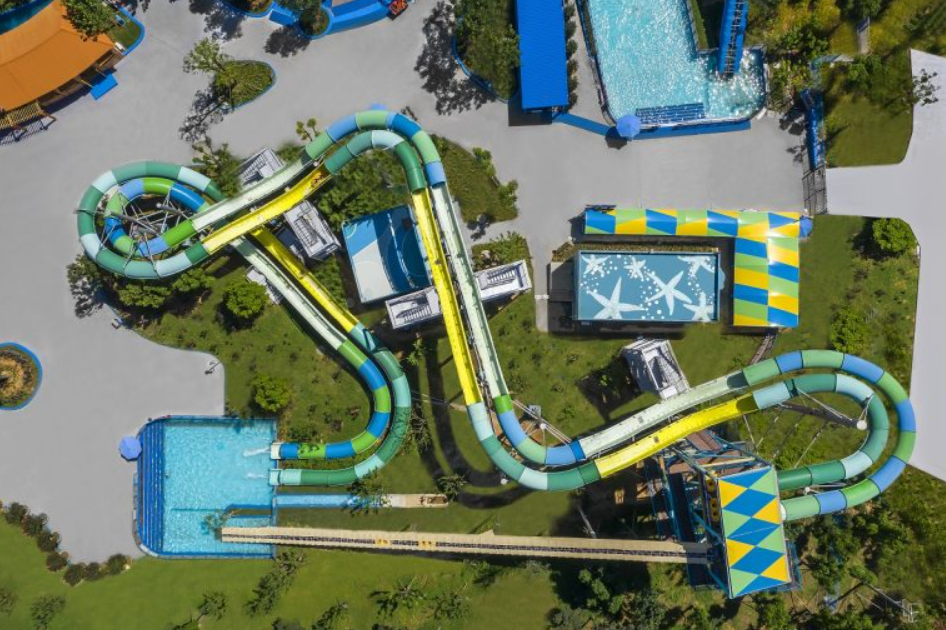
Among different high-thrill attractions, the DOUBLE WATER ROLLER COASTER provides a unique attraction format through its dual-track design. Compared with traditional slides, this structure allows two rafts to operate side by side, creating a racing layout that can support group interaction within the attraction area. The product features a 20-meter platform height, a floor space of approximately 2,500㎡, a 2-person raft configuration, and a maximum speed of 8.5 m/s. These specifications help project owners evaluate installation space, operation capacity, and attraction placement during the planning stage.

As part of Dalang’s combination solutions, this type of attraction can be integrated with other water park facilities rather than treated as an independent ride. The dual-track structure and large-scale layout require coordination with surrounding attractions, visitor routes, and supporting systems. Dalang provides project-based planning that considers attraction arrangement, site conditions, and overall park operation requirements.


Engineering Features Behind a Racing Water Attraction

The DOUBLE WATER ROLLER COASTER uses precision-molded fiberglass segments to create a smooth riding path. Its structure requires careful engineering because the attraction involves speed changes, multiple elevations, and continuous water flow. Professional production processes are important for maintaining stable operation.

Companies searching among water park rides manufacturers should also consider technical capability beyond product appearance. A complete project requires engineering knowledge, installation experience, and cooperation between different service teams. These factors influence the long-term performance of a water attraction.


Supporting High-Capacity Water Park Operations

Large water parks often face busy seasonal periods, so attraction capacity is an important planning factor. The DOUBLE WATER ROLLER COASTER is designed to support multiple rafts during operation, helping parks manage visitor demand through organized ride cycles.

This type of attraction shows why water park equipment should be selected as part of a complete project plan. The right combination can improve visitor experience while supporting smoother daily operations. Manufacturers with broad project experience can provide more suitable solutions for different park sizes and layouts.


Technology Development and Project Experience

Innovation is also an important part of water attraction development. With 42 patents, Dalang has developed technical experience related to water park solutions. They combine product development with practical project knowledge to support different types of commercial water parks.

Manufacturer experience can influence project communication and delivery quality. Their 13 specialized water park subsidiary companie s provide additional support in different service areas, including related products and project services. This structure allows cooperation with different partners during complex developments.


Choosing a Partner for Future Water Park Projects

When comparing a water slide supplier, investors should look beyond a single attraction. A complete solution should include design ability, manufacturing experience, installation support, and operation understanding. These elements help create a balanced water park environment.

Modern parks often combine thrilling attractions with family-friendly facilities and supporting areas. Manufacturers with experience in combination planning can help customers create more complete projects. The selection process should focus on long-term cooperation and practical project requirements.


Conclusion

Building a high-thrill attraction requires more than selecting one exciting product. A successful project depends on engineering, combination planning, and professional service support. Dalang provides integrated water park solutions with project experience, compliance awareness, and technical development capabilities, helping partners plan attractions as part of a complete water park environment.

Their approach connects attractions such as the DOUBLE WATER ROLLER COASTER with broader water park equipment planning. For investors looking for a complete water coaster ride solution, working with experienced water park rides manufacturers and a professional water slide supplier can support the development of functional, engaging, and well-coordinated water park projects.


September 10, 2026 0 comments
0 FacebookTwitterPinterestEmail
Industry

Index CFDs vs Stock CFDs: What Is the Difference?

by apbclothing September 5, 2026
written by apbclothing

When traders explore CFD markets, one common question is whether they should trade individual company shares or broader market indices. Both index CFDs and stock CFDs allow traders to speculate on price movements without owning the underlying assets, but they differ significantly in terms of market exposure, risk factors, and trading strategies.


For traders using an indices trading platform, understanding these differences can help them choose instruments that match their goals. Whether you are interested in online index trading or exploring individual stock opportunities, knowing how each CFD product works is an important step before entering the market.


What Are Index CFDs?


An index CFD is a contract for difference based on the performance of a stock market index. Instead of trading shares from one company, traders gain exposure to a group of companies represented within an index.


For example, the S&P 500 tracks a broad selection of major US companies, while the NASDAQ 100 focuses on large non financial companies listed on the NASDAQ exchange. Other widely followed indices include Germany’s DAX 40, the UK FTSE 100, and Japan’s Nikkei 225.


When trading index CFDs, traders do not own the companies included in the index. Instead, they speculate on whether the overall index price will rise or fall. If market conditions suggest growth, traders may open a long position. If they expect declines, they may choose a short position.


This approach allows traders to follow broader economic trends rather than focusing on the performance of a single company.


What Are Stock CFDs?


Stock CFDs are financial derivatives based on individual company shares. They allow traders to speculate on the price movement of specific stocks without purchasing the actual shares.


For example, instead of buying shares of a technology company directly, a trader can use a stock CFD to trade based on changes in that company’s share price. The potential profit or loss depends on whether the trader correctly predicts the direction of the stock.


Stock CFDs are often used by traders who closely follow specific companies, industries, earnings reports, or corporate developments. However, because they are linked to one company, their price movements can be affected by company specific events such as financial results, management changes, product launches, or regulatory updates.


Key Differences Between Index CFDs and Stock CFDs


Market Exposure


The biggest difference between index CFDs and stock CFDs is the level of market exposure.


Index CFDs provide exposure to multiple companies through a single position. Since an index represents a group of stocks, the performance of one company usually has a smaller impact compared with the overall market movement.


Stock CFDs provide direct exposure to one company. This means traders can benefit from strong performance by a specific business, but they also face greater risk if that company experiences unexpected challenges.


For traders who prefer broader market analysis, index CFDs may offer a simpler way to follow economic trends. For those who focus on detailed company research, stock CFDs may provide more targeted opportunities.


Volatility and Risk Management


Stock CFDs often experience stronger price movements because they are influenced by individual company factors. A positive earnings report may cause a stock price to rise significantly, while negative news can lead to sharp declines.


Index CFDs are generally influenced by wider factors such as economic data, interest rates, market sentiment, and global events. Since they represent multiple companies, the impact of a single company’s performance may be reduced.


However, index trading still carries risks. Market volatility can affect index prices quickly, especially during major economic announcements or periods of uncertainty. Traders should use appropriate risk management methods, including position sizing and stop loss strategies.


Trading Strategies


The choice between index CFDs and stock CFDs often depends on a trader’s strategy.

Online index trading is commonly used by traders who analyze macroeconomic trends. They may focus on factors such as central bank policies, employment data, inflation reports, and overall market sentiment.


Stock CFD trading often requires deeper company research. Traders may analyze financial statements, industry conditions, product performance, and company announcements before making decisions.


Both approaches require market knowledge, technical analysis skills, and disciplined risk management.


Why Use an Indices Trading Platform for Index CFD Trading?


A suitable indices trading platform provides access to global markets, analytical tools, and flexible trading features that support different trading styles.


Platforms such as GTCFX provide access to various global index CFDs, allowing traders to monitor markets from different regions through one account. Available instruments include major indices from the US, Europe, and Asia, giving traders opportunities to follow different economic environments.


A professional trading environment should also offer reliable execution, transparent trading conditions, and access to commonly used platforms. GTCFX supports trading through platforms including MT4, MT5, and its mobile trading application, allowing users to manage positions across different devices.


For traders comparing index CFDs and stock CFDs, platform features can influence the overall trading experience. Charting tools, market information, and account flexibility can help traders make more informed decisions.


How Should Traders Choose Between Index CFDs and Stock CFDs?


The right choice depends on individual trading objectives and market knowledge.


Traders who prefer broader market exposure may consider index CFDs because they provide access to a group of companies rather than relying on one stock. This can be suitable for those who follow economic trends and global market movements.


Traders who prefer analyzing specific companies may choose stock CFDs because they allow focused exposure to individual businesses.


Before selecting an instrument, traders should consider their risk tolerance, trading timeframe, and understanding of the market. A short-term trader may approach these products differently from someone with a longer term market view.


Choosing Between Index CFDs and Stock CFDs


Index CFDs and stock CFDs offer different ways to participate in financial markets. Index CFDs focus on broader market performance, while stock CFDs provide exposure to individual companies. The main differences involve market coverage, risk factors, and trading strategies.


For traders looking to explore online index trading, choosing a reliable indices trading platform can provide access to global indices and useful trading tools. GTCFX offers index CFD trading opportunities across multiple markets, helping traders analyze and participate in global market movements with a structured trading approach.


Understanding the characteristics of each CFD product allows traders to make decisions based on their own goals, experience level, and market perspective.

September 5, 2026 0 comments
0 FacebookTwitterPinterestEmail
Industry

How Automation Is Transforming Rubber Injection Machines

by apbclothing August 28, 2026
written by apbclothing

Automation is changing rubber molding from a sequence of operator-dependent steps into a controlled production system. A modern rubber injection molding machine can coordinate feeding, injection, pressure, curing, mold movement, and part handling with repeatable timing. For industrial manufacturers, the objective is not automation for its own sake but more stable output, traceable quality, and predictable labor demand.


The business case varies by product mix. High-volume components may justify extensive handling equipment, while short runs need flexible recipes and fast changeovers. Manufacturers should identify where manual variation, waiting, scrap, or safety exposure create measurable cost, then automate those constraints in a logical order.


Replace Variable Actions with Controlled Sequences

Traditional molding depends heavily on operator’s timing and judgment. An automated rubber injection machine can repeat material preparation, mold closing, injection, curing, and opening according to stored parameters. Consistent sequencing reduces cycle-to-cycle variation and gives supervisors a clearer baseline for investigating quality or productivity changes.


Advanced injection control supports stable pressure and accurate feeding. Those capabilities matter because rubber begins changing as heat and time act on the compound. Repeatable delivery helps fill the cavity before viscosity rises, reducing incomplete parts and limiting the temptation to compensate with excessive pressure or material.


Servo-hydraulic control can match power delivery to process demand instead of running every stage at the same output. This approach can reduce electricity consumption while maintaining stable injection performance. Energy savings should still be verified through accepted parts per kilowatt-hour under the buyer’s real production conditions.


Safety improves when hazardous movements are contained within monitored sequences. Guards, interlocks, emergency stops, safe access, and restart logic remain essential. Automation does not remove the need for risk assessment; it changes the interaction between people, molds, material, and moving equipment.


Changeover design determines whether automation remains useful for mixed production. Stored recipes, repeatable mold connections, documented setup checks, and accessible cleaning points allow a plant to switch products without rebuilding the process. Flexibility should be demonstrated during acceptance trials using representative molds rather than assumed from controller capacity.


Connect Machines with Data and Material Flow

A standalone rubber injection molding machine can automate its own cycle, but factory-level gains depend on what happens before and after molding. Material staging, insert loading, mold preparation, part removal, deflashing, inspection, and packing must keep pace. A slow adjacent operation can leave an advanced press waiting or create uncontrolled buffers.


Production data such as cycle information, process parameters, alarms, and quality records can help engineering teams identify losses and improve process stability. Trend analysis then helps engineering teams separate normal product variation from tool wear, material inconsistency, sensor drift, or operator intervention.


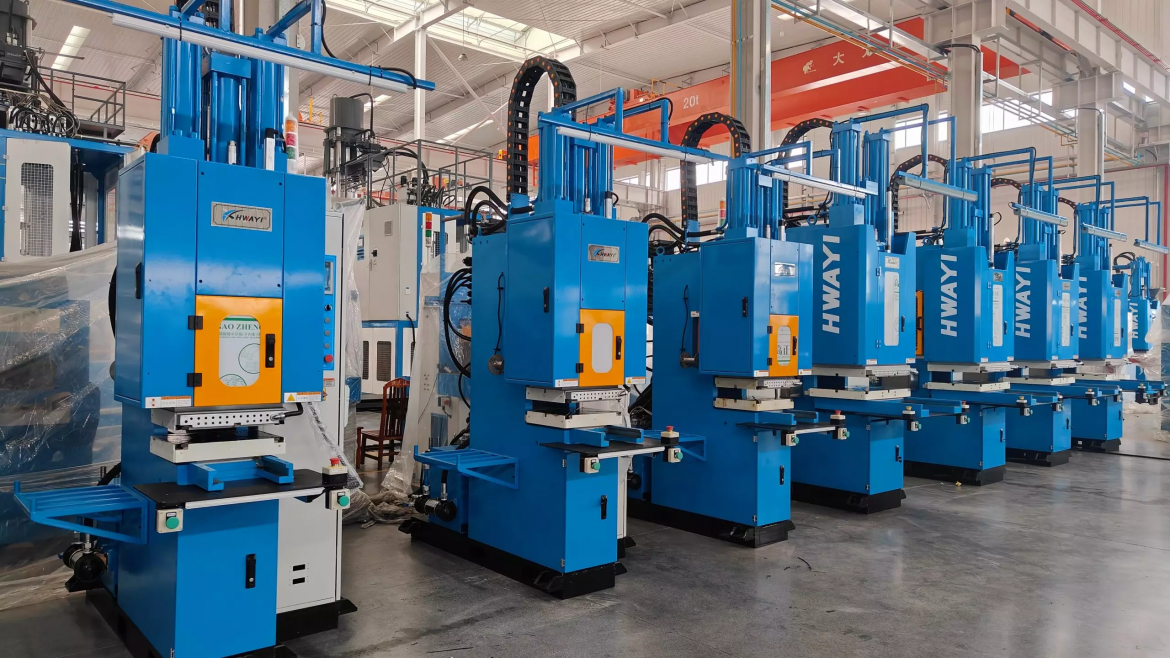
HWAYI offers vertical A and E Series, angle B Series, FIFO BF Series, and C-frame J and JT Series configurations. Such machine platform choices allow automation to be matched to mold access, insert handling, product geometry, and factory layout instead of forcing every application into one machine arrangement.


Integration standards should be agreed during specification. Signal lists, communication protocols, data ownership, user access, cybersecurity, and backup responsibilities affect long-term usability. A connected machine creates value only when plant personnel can retrieve, interpret, and protect the information it produces.


Production records can support traceability when factories define appropriate data collection practices. The scope should remain focused on decisions the factory will actually make, avoiding data collection that adds complexity without operational use.


Preserve Flexibility Through People and Maintenance

Automation changes job content rather than eliminating the need for skilled staff. Operators monitor processes, prepare materials, confirm setups, respond to alarms, and protect quality. Technicians need competence in hydraulics, controls, sensors, software, and mechanical systems. Training should be role-based and use the actual machine configuration.


Recipe management is especially important for a flexible rubber injection machine. The control system needs to protect and version approved parameters and link them to the correct mold and compound. Controlled access prevents casual adjustments from masking a process problem or creating differences between shifts.


Preventive maintenance must include the new automation layer. Sensors, cables, servo systems, safety devices, software backups, and communication hardware join pumps, valves, heaters, seals, and guides on the maintenance plan. Condition data can refine intervals, but it does not replace physical inspection and planned replacement of wear parts.


Management should define ownership before the cell enters production. Engineering may control recipes, maintenance may manage backups, and operations may review performance dashboards. Clear responsibilities prevent minor software or communication issues from remaining unresolved because every department assumes another team controls the automated asset.


The strongest automation projects begin with measurable production needs and finish with sustainable operating routines. A rubber injection molding machine from HWAYI can provide continuous automatic production, stable control, and a heavy-duty platform, yet lasting results depend on line balance, data discipline, trained personnel, and maintenance. That measured perspective keeps the investment focused on business performance rather than promotional claims.

August 28, 2026 0 comments
0 FacebookTwitterPinterestEmail
IndustryTechTool

What Is Grating Structured Light Technology in 3D Vision?

by apbclothing August 14, 2026
written by apbclothing

Technological advancements in industrial automation rely heavily on precise data acquisition methods to ensure high-quality production outputs. Grating structured light technology emerges as a sophisticated approach for capturing complex geometries with high fidelity. When organizations incorporate transfer3d solutions into their inspection workflows, they gain the ability to generate dense point clouds that represent surface topography with remarkable accuracy. This methodology serves as a cornerstone for modern metrology, enabling systems to measure minute deviations that traditional sensors might overlook.


Mechanisms of Grating Projection


The fundamental principle behind grating structured light involves the projection of a series of patterned light fringes onto an object’s surface. An integrated camera captures the deformation of these patterns as they wrap around the target’s contours. By analyzing the shift in the projected grating, the 3d vision technology calculates depth information for every pixel. Because this process is non-contact, it preserves the integrity of delicate materials while maintaining high throughput. Engineers utilize this phase-shifting approach to derive precise coordinate data, which is essential for reverse engineering and automated quality control applications.


Integration Within Automated Environments


Implementing high-precision vision systems requires careful calibration to manage varying ambient light conditions and surface reflections. The transfer3d platform utilizes advanced algorithms to interpret the fringe patterns even on metallic or glossy components. By maintaining a stable optical setup, these systems ensure consistency across large-scale manufacturing lines. Operators rely on the robustness of 3d vision technology to reduce downtime caused by manual inspection errors. This automated data collection allows production managers to maintain strict tolerance levels, ensuring that every manufactured item meets required specifications without requiring human intervention.


Precision Data Processing


Once the light patterns are captured, the raw data must be processed into usable formats for industrial software. The mathematical transformation of phase values into XYZ coordinates occurs in real-time, allowing for immediate feedback during the manufacturing process. Organizations that deploy transfer3d architectures benefit from high-resolution scanning that captures subtle surface textures and edges. As the industry moves toward tighter quality control mandates, the reliability of 3d vision technology becomes a critical asset. Efficient processing workflows enable immediate decision-making, which directly correlates to reduced waste and improved material utilization in high-stakes production scenarios.


Effective industrial imaging requires a combination of hardware stability and intelligent software analysis. By adopting specialized structured light approaches, facilities achieve a level of dimensional accuracy that drives long-term operational success. The consistent application of these optical principles ensures that production data remains actionable for engineers and quality management teams throughout the entire product lifecycle.


August 14, 2026 0 comments
0 FacebookTwitterPinterestEmail
  • 1
  • 2
  • 3
  • …
  • 14

About Me

About Me

Hi there, my name is Ellen. Welcome to my Blog where you can get beauty tips and so much more.

Keep in touch

Facebook Twitter Instagram Pinterest Youtube Bloglovin

Recent Posts

  • Why All-in-One Smart Boards Are Becoming Popular in Modern Classrooms and Meeting...

    September 30, 2026
  • The Science Behind Color Consistency (Binning) in LED Landscape Spotlight

    September 29, 2026
  • Can Precision Manufacturing Improve Safety Lancet Needle Performance and Consistency?

    September 28, 2026
  • Tackling Power Quality Issues in Cement Plants: Practical Solutions for Plant Engineers

    September 26, 2026
  • Clinical Development Consulting: How External Expertise Fills Internal Capability Gaps

    September 26, 2026

Categories

  • Agriculture (1)
  • AR (1)
  • Beauty (21)
    • Hair Style (7)
    • Makeup (7)
    • Skincare (7)
  • Biology (3)
  • Business (86)
  • Catalyst (1)
  • Dentistry (1)
  • Desgin (2)
  • Dress (1)
  • Economy (25)
  • Featured (10)
  • Global Trade (30)
  • Healthcare (1)
  • Hotel (1)
  • Industry (132)
  • Innovation (55)
  • Jewelry (3)
  • Kitchen (2)
  • Knife (1)
  • LED (2)
  • Lifts (1)
  • light (1)
  • Living (1)
  • Machine (14)
  • Manufacturer (52)
  • Market (26)
  • Medical (13)
  • Monitors (1)
  • News (64)
  • Product (38)
  • Smart Lock (1)
  • Tech (74)
  • Technology (15)
  • Tool (4)
  • Vegetables indoor (1)
  • 未分类 (1)

About Me

About Me

Hi there, my name is Ellen. Welcome to my Blog where you can get beauty tips and so much more.

Popular Posts

  • 1

    香港家庭首選的豪華MPV該具備哪些特點

    July 9, 2025
  • 2

    5 DIY Natural Skin Treatments For You

    January 22, 2019
  • 3

    Makeup Routine For A Dry Winter

    January 22, 2019
  • 4

    How To Use Blow Dryer The Right Way

    January 22, 2019

Featured Posts

  • Why All-in-One Smart Boards Are Becoming Popular in Modern Classrooms and Meeting Rooms

    September 30, 2026
  • The Science Behind Color Consistency (Binning) in LED Landscape Spotlight

    September 29, 2026
  • Can Precision Manufacturing Improve Safety Lancet Needle Performance and Consistency?

    September 28, 2026
  • Tackling Power Quality Issues in Cement Plants: Practical Solutions for Plant Engineers

    September 26, 2026
  • Facebook
  • Twitter
  • Instagram
  • Pinterest
  • Youtube
  • Bloglovin

All Right Reserved. Designed and Developed by Apbclothing.


Back To Top
apbclothing
  • Home
  • Featured
  • Hair Style
  • Makeup
  • Skincare