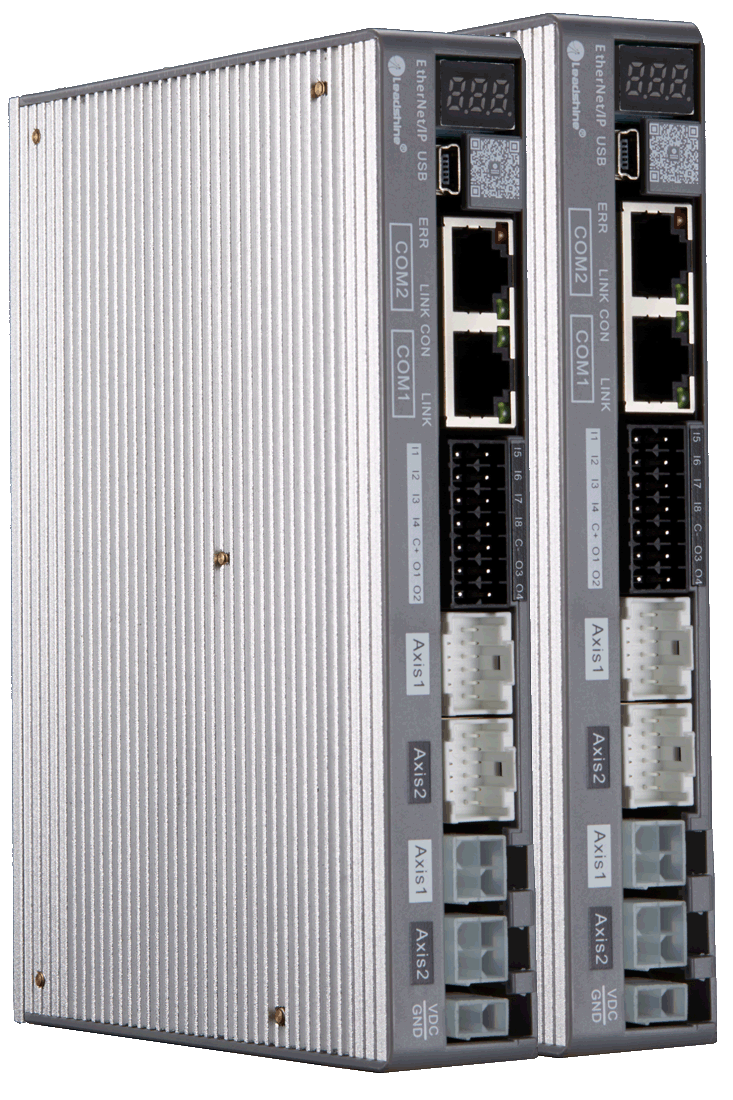
In the precise world of industrial automation and motion control, the efficacy of a machine often relies on the components that operate behind the scenes. While the motor itself provides the muscle, the intelligence and regulation of that power come from a critical device known as the stepper drive. As the intermediary between a motion controller and the motor, the stepper drive dictates exactly how the motor moves, how much torque it applies, and how smoothly it operates. Companies like Leadshine have spent decades refining this technology, producing advanced stepper motor drivers that enable everything from 3D printers to high-end CNC machinery to function with exceptional accuracy.
The Role of the Stepper Drive in Automation
At its core, a stepper drive is an electronic power amplifier. Its primary function is to translate low-voltage control signals—typically from a PLC (Programmable Logic Controller), PC, or microcontroller—into the high-power electrical current required to energize the windings of a stepper motor. Without a stepper drive, a stepper motor is essentially an inert paperweight; it cannot interpret the digital “step” and “direction” commands that dictate position. Leadshine has established itself as a leader in this field by developing drives that not only translate these signals but optimize them, ensuring that the motor performs efficiently without missing steps or overheating.
How Stepper Motor Drivers Process Signals
The operation of a stepper motor driver begins with the receipt of input signals. The most common control method is “Pulse and Direction.” In this setup, the controller sends a series of electrical pulses to the stepper drive. Each pulse represents a single step of rotation. The frequency of these pulses determines the speed of the motor, while the number of pulses determines the distance traveled. A separate signal indicates the direction (clockwise or counter-clockwise). The stepper motor driver interprets these logic-level signals (usually 5V or 24V) and rapidly switches the current flowing through the motor’s coils to force the magnetic rotor to align with the energized stator poles, resulting in precise physical motion.
The Magic of Microstepping Technology
Early generations of stepper drives operated in “full step” mode, where a standard motor would move 1.8 degrees per step (200 steps per revolution). While accurate, this often resulted in jerky motion and resonance at low speeds. Modern stepper motor drivers, particularly the digital series from Leadshine, utilize a technology called microstepping. By regulating the current in the motor windings to intermediate levels—rather than just “on” or “off”—the drive can position the rotor between full steps. This allows a standard 200-step motor to behave as if it has 5,000 or even 50,000 steps per revolution. The result is drastically smoother motion, reduced vibration, and quieter operation, which is critical for precision instruments and medical devices.
Advanced Features: Anti-Resonance and Smoothness
One of the distinguishing features of high-quality stepper drives is their ability to combat the natural physics of the motor. Stepper motors are prone to resonance—a phenomenon where the motor vibrates excessively at certain speeds, potentially causing it to stall or lose position. Leadshine integrates advanced Digital Signal Processing (DSP) into their stepper motor drivers to actively calculate and suppress this resonance. By monitoring the motor’s behavior electronically, the drive applies corrective algorithms in real-time. This “anti-resonance” feature ensures that the motor delivers consistent torque across its entire speed range, allowing machines to run faster and more reliably than they could with generic drives.
Versatility in Voltage and Power
Stepper drives are designed to handle a wide spectrum of power requirements. Leadshine offers drives that operate on DC voltages (typically 20V to 80V) for smaller applications, as well as high-voltage AC input drives (up to 220VAC) for heavy-duty industrial machines. The choice of voltage is crucial because it directly impacts the motor’s top speed. A higher voltage stepper drive forces current into the motor coils faster, allowing the motor to maintain torque at higher RPMs. This versatility means that engineers can select a stepper motor driver that perfectly matches the power supply available in their control cabinet, whether it is a battery-powered mobile robot or a mains-powered industrial lathe.
Smart Configuration and Self-Test Capabilities
Modern stepper drives have evolved beyond simple “plug and play” hardware into smart devices. Many Leadshine drives feature “auto-tuning” or self-configuration capabilities. Upon power-up, the drive sends a brief test signal to the connected motor to measure its electrical properties, such as inductance and resistance. Based on this data, the stepper motor driver automatically adjusts its internal current control parameters (PI control loops) to optimize performance for that specific motor. This eliminates the tedious manual tuning often required in the past and guarantees that the system is running at peak efficiency from the very first moment of operation.
Applications Driving Industry Forward
The application of stepper drives is nearly ubiquitous in modern manufacturing. They are the standard for open-loop positioning systems where cost-effectiveness and simplicity are prioritized. You will find stepper motor drivers powering the axes of laser cutting machines, controlling the material feed in packaging lines, and managing the precise movement of syringe pumps in laboratory automation. In the textile industry, Leadshine drives control the intricate patterns of industrial knitting machines. Their ability to hold a position without mechanical brakes (detent torque) makes them ideal for Z-axis applications where gravity must be counteracted when the machine is stationary.
The Critical Link in Motion Control
In summary, stepper drives are the unsung heroes of motion control, acting as the critical link between digital instructions and physical movement. They provide the necessary power, precision, and protection to ensure motors operate smoothly and accurately. By leveraging advanced DSP technology and features like microstepping and anti-resonance, manufacturers like Leadshine have elevated the humble stepper motor driver into a sophisticated tool capable of meeting the rigorous demands of Industry 4.0. For any engineer or machine builder, understanding the capabilities of these drives is the first step toward building faster, quieter, and more reliable automated systems.
