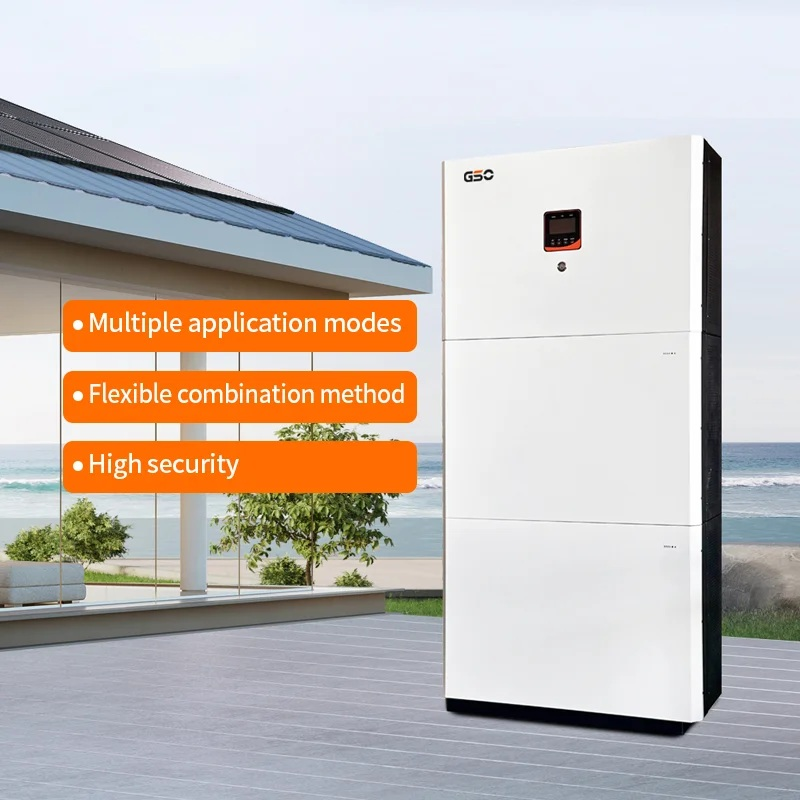
Integration changes where the coordination work occurs in an energy-storage system: conversion, charging, battery control and protection are designed around one platform instead of being left to separately selected devices. That integrated approach is the basis of all in one energy storage.
It is especially relevant where installation space, wiring complexity, system monitoring and future battery expansion must be considered at the same time. An All in One Solar Power System does not remove the need for electrical design; instead, it places more of the conversion, charging and battery-management logic inside one architecture.
Why Integration Changes System Behavior
The technical value of integration is not simply that several components share one cabinet or stack. An all in one energy storage platform has to coordinate PV input, battery charging, AC output, grid interaction, protection and monitoring without creating conflicts between those functions. Control logic therefore becomes part of the product architecture rather than an external layer added after installation.
In GSOpower‘s GSL Series, the stackable architecture places the hybrid inverter and LiFePO4 battery modules alongside an MPPT solar charger, BMS functions and power distribution. The All in One Solar Power System also includes DSP digital control, multi-layer safety warnings and APP/cloud monitoring, so operating data and protective functions are managed within the same platform instead of being treated as unrelated subsystems.
Charging Paths and Stored-Energy Control
An integrated platform must decide where energy comes from and where it should go. In all in one energy storage, solar generation can charge the battery through the MPPT stage, grid power can provide an alternative charging source, and hybrid operation can combine available sources according to the selected mode. The GSL Series provides three output modes and four charging modes, which changes how stored energy is reserved, replenished or delivered to connected loads.
For the All in One Solar Power System, the charging hardware sets practical limits on those operating choices. Depending on configuration, maximum MPPT charging current is 100 or 200 A, mains charging current is 60 or 120 A, and hybrid charging current is 100 or 200 A. PV input can use one or two MPPT channels, with total array capability reaching 5.5 kW or 11 kW and an MPPT operating window of 120–450 V.
Power Ratings, Overload and Transfer Performance
Rated output describes normal continuous operation, while short-duration overload figures show how the system responds when loads briefly exceed that level. The GSL family pairs 5.5 kW or 10 kW inverter ratings with 10, 20 or 30 kWh storage depending on the model.
In an all in one energy storage installation, those values should be read together because battery capacity determines energy duration while inverter power determines how much load can be supplied at one time.
Pure sine-wave output is paired with a listed 10 ms typical inverter/bypass transfer; maximum battery-inverter efficiency is 93% for the All in One Solar Power System. Its overload protection is staged: 102–110% load can be sustained for five minutes, 110–125% for ten seconds, while loads above 125% trigger protection in about five seconds.
These limits are useful when assessing motors, compressors or other loads with short power surges. A brief motor-starting surge and a sustained overload therefore place different demands on the inverter, so the protection timings need to be read together with rated output rather than as a single overload figure.
Battery Conditions and Installation Limits
Battery specifications define more than storage quantity. The 48 V section of the GSL platform operates across 42–54.75 V or 44.8–58.4 V depending on configuration, with 0.5C or 1C charge/discharge options. For all in one energy storage, module count also affects system size and weight, so expansion has physical consequences as well as electrical ones.
The All in One Solar Power System is rated IP20, operates from -10 to 55°C and has a storage-temperature range of -25 to 60°C. The inverter uses variable-speed forced-air cooling, while the battery section relies on natural air cooling. Those conditions make indoor placement, airflow, service clearance and ambient temperature part of the system decision rather than details to consider after the equipment has been selected.
Where an Integrated Platform Fits
The strongest reason to use an integrated platform is usually the need to coordinate several functions within a compact installation while keeping battery capacity expandable. GSOpower specifies the GSL family for more than 6,000 cycles and a 10-year life and lists CE, MSDS and UN38.3 certifications.
In an all in one energy storage project, such figures describe the product family, but the final configuration still has to match site load, PV array size, desired autonomy and the permitted inverter power.
An all in one solar power system is therefore most appropriate where integrated installation, solar and grid charging, remote monitoring and modular storage are all relevant to the same project. It should not be treated as automatically suitable simply because the components are pre-coordinated.
Load profile, PV voltage, charging current, environmental conditions and expected expansion remain decisive. Integration reduces the number of independent interfaces, but it does not change the electrical limits that govern a viable configuration.
