Battery-pack welding is rarely a case of simply choosing a machine with enough welding current. Cell format, busbar geometry, material combinations, joint location, electrode access, production volume, and inspection requirements can all affect the equipment architecture.
That makes the choice between a custom resistance welding manufacturer and a standard machine supplier a process-engineering decision, not merely a purchasing comparison.
For battery manufacturers, the central question is more practical: does the product fit an established machine platform, or does the welding process itself need to be developed around the product?
The Machine Should Follow the Battery Design
Battery-pack construction can involve numerous conductive joints, including cell-to-tab and busbar connections. The U.S. Department of Energy identifies resistance spot welding as one of the joining technologies used for battery cell manufacturing and specifically highlights welding current, welding time, and electrode force as parameters requiring real-time attention.
That matters because a standardized machine starts with an existing mechanical and control architecture. If the pack design already matches the machine’s electrode approach, workpiece dimensions, tooling arrangement, and process window, standardization can reduce engineering effort.
A different situation emerges when the joint is difficult to access, materials differ from conventional applications, or the welding sequence must coordinate with an unusual assembly process. Here, the equipment needs to adapt to the product rather than forcing the product into a predetermined machine configuration.
Standard Equipment Works When the Process Is Already Known
Standard machinery has a legitimate role in battery production. A proven platform can shorten equipment selection, simplify operator training, and make replacement components easier to standardize across a factory.
Its strongest economic case appears when the manufacturer has a stable product family, repeatable joint geometry, predictable production volume, and a welding process that has already been validated. Under those conditions, paying for extensive customization may add engineering work without creating proportional manufacturing value.
The risk is assuming that a standard machine remains suitable after the battery design changes. A new cell arrangement or busbar geometry can alter electrode access, clamping requirements, weld schedules, and handling. What looked inexpensive at procurement can become expensive during integration if modifications are required after delivery.
Customization Matters Most at the Process-Development Stage
Customization becomes more meaningful when welding is still being developed. Battery manufacturers may need to determine an appropriate combination of current, time, force, electrode configuration, and material stack before freezing the production process. The DOE’s battery-manufacturing research specifically identifies real-time monitoring and feedback as important areas for improving joining performance.
A resistance welding manufacturer involved early in this stage can potentially design the machine around the validated process rather than retrofit an existing platform afterward. The value is therefore not simply a different fixture or electrode. It can involve coordinated mechanical tooling, welding control, sensing, data acquisition, and automation interfaces.
For engineering teams launching a new battery pack, that distinction can affect development time. Equipment that accommodates process trials and subsequent production requirements may reduce the gap between laboratory validation and factory deployment.
Quality Data Separates a Machine Purchase From a Manufacturing System
Battery welding also changes the meaning of “machine quality.” A machine that produces a weld is only one part of the manufacturing system. Engineers increasingly need evidence that the joining process remains inside its defined operating window during production.
DOE research on battery joining identifies real-time monitoring of parameters and joint quality as a development priority. For resistance spot welding, the referenced parameters include welding time, current, and electrode force, while quality objectives can include characteristics such as weld nugget size and joint condition.
A customized resistance welding solutions package can therefore be evaluated by how effectively its controls and data architecture support process validation, alarms, parameter management, and production records. Standard equipment may already provide suitable functions, but the critical question is whether those functions match the manufacturer’s actual quality strategy.
Research from the U.S. DRIVE program also demonstrates the direction of development: inline signals can be analyzed to identify deviations in resistance spot-welding quality and support automated quality decisions.
Compare the Change Cost, Not Just the Machine Price
The cheapest quotation is not necessarily the lowest-cost manufacturing option. Procurement teams should calculate what happens after the machine enters production.
A standard machine may have a lower initial engineering burden, but additional tooling, external automation, software modification, or integration work can increase the total project cost. A customized system may require more engineering at the beginning while reducing adaptation work during commissioning.
The comparison should therefore include process-development support, fixture changes, controls integration, spare parts, maintenance access, programming, commissioning, and future product revisions. Production downtime also deserves attention because a machine that is difficult to modify can become a constraint when the battery design evolves.
This is particularly relevant to facilities developing multiple pack configurations. The U.S. Department of Energy has emphasized flexible, scalable, and highly controllable manufacturing platforms as part of broader battery-manufacturing development efforts.
What a Battery Manufacturer Should Ask Before Signing the PO
The first question for any supplier should be whether the proposed equipment can reproduce the required weld process under actual production conditions. Engineers should provide material combinations, thicknesses, joint geometry, expected takt, electrode access, cooling requirements, automation interfaces, and quality-monitoring objectives.
A capable resistance welding manufacturer should then explain which elements are standard and which require engineering changes. That distinction makes quotations easier to compare and exposes hidden integration work before the purchase order is released.
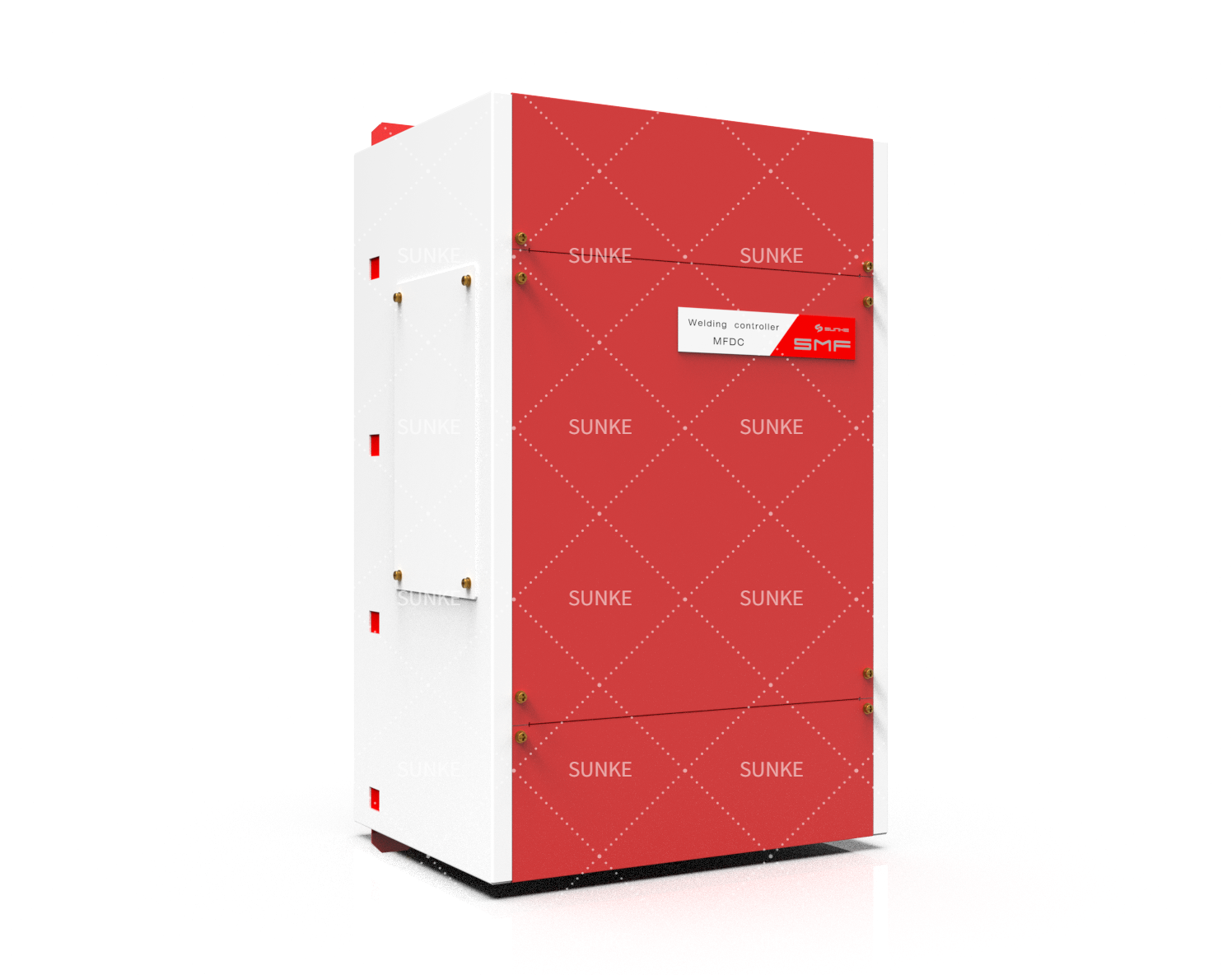
Sunke can be considered when the project requires the welding controller and process architecture to be evaluated together rather than treating the welding power source as an isolated component. Its position in the resistance-welding equipment field makes the distinction between standardized hardware and application-specific engineering relevant to battery manufacturers evaluating new production lines.
For procurement teams, resistance welding solutions should ultimately be judged against the battery’s manufacturing requirements, not against a generic machine specification sheet. A standard machine is appropriate when the product and process already fit the platform. Custom engineering becomes more compelling when joint geometry, process development, quality monitoring, or automation integration creates requirements outside that platform.
Sunke‘s role can therefore be assessed on the same practical basis as any specialist supplier: how well its equipment architecture addresses the defined process, how clearly the supplier identifies customization boundaries, and whether the resulting system can support production rather than merely pass an equipment acceptance test.
The better choice is consequently determined by process maturity. Mature, repeatable battery-pack welding can benefit from standardization. New or highly specific joining processes may justify customization because engineering flexibility has direct value during development and scale-up. The purchasing decision should reflect that difference instead of assuming that either custom equipment or standard equipment is universally superior.
