Global mattress brands face a specification challenge that does not end when a model is launched. The same name may appear in different markets, sizes, packaging formats, and sales channels. Growth makes small specification ambiguities more expensive because they can spread across larger orders and longer shipping routes. The future of manufacturing for these brands depends on joining product variation to repeatable production, rather than treating scale and differentiation as opposing goals.
Several practical pressures shape that work: more precise product briefs, evidence that samples can be reproduced, and logistics choices that match the construction. None requires a prediction about a particular technology or market share. A mattress manufacturer can be evaluated on how it handles these present decisions while keeping room for new designs.
Develop Variation Without Losing the Core
A global line may need different firmness targets, dimensions, covers, or labels. Each variation has a different effect on production. Branding artwork changes identification; a revised comfort layer can change finished height and feel; a different spring structure may require a separate sample. The useful development system distinguishes presentation changes from construction changes and records both under controlled versions.
An international brand also has to decide what stays common. Shared product platforms can simplify training and ordering, while market-specific details address local bed sizes or channel requirements. Across OEM versions, a China mattress manufacturer needs records distinguishing stable core components and processes from changes approved for each market. A long menu of options is less valuable than a clear map of what each option changes.
At Suisin Furniture, OEM and ODM scope extends from brand presentation to changes in support structure and surface feel. The company reports over 300 patents and more than 50 design engineers. Those figures indicate development resources, but an individual brand still needs a detailed model-level brief, sample, and approval record to turn capacity into a consistent collection.
Connect Scale to Control
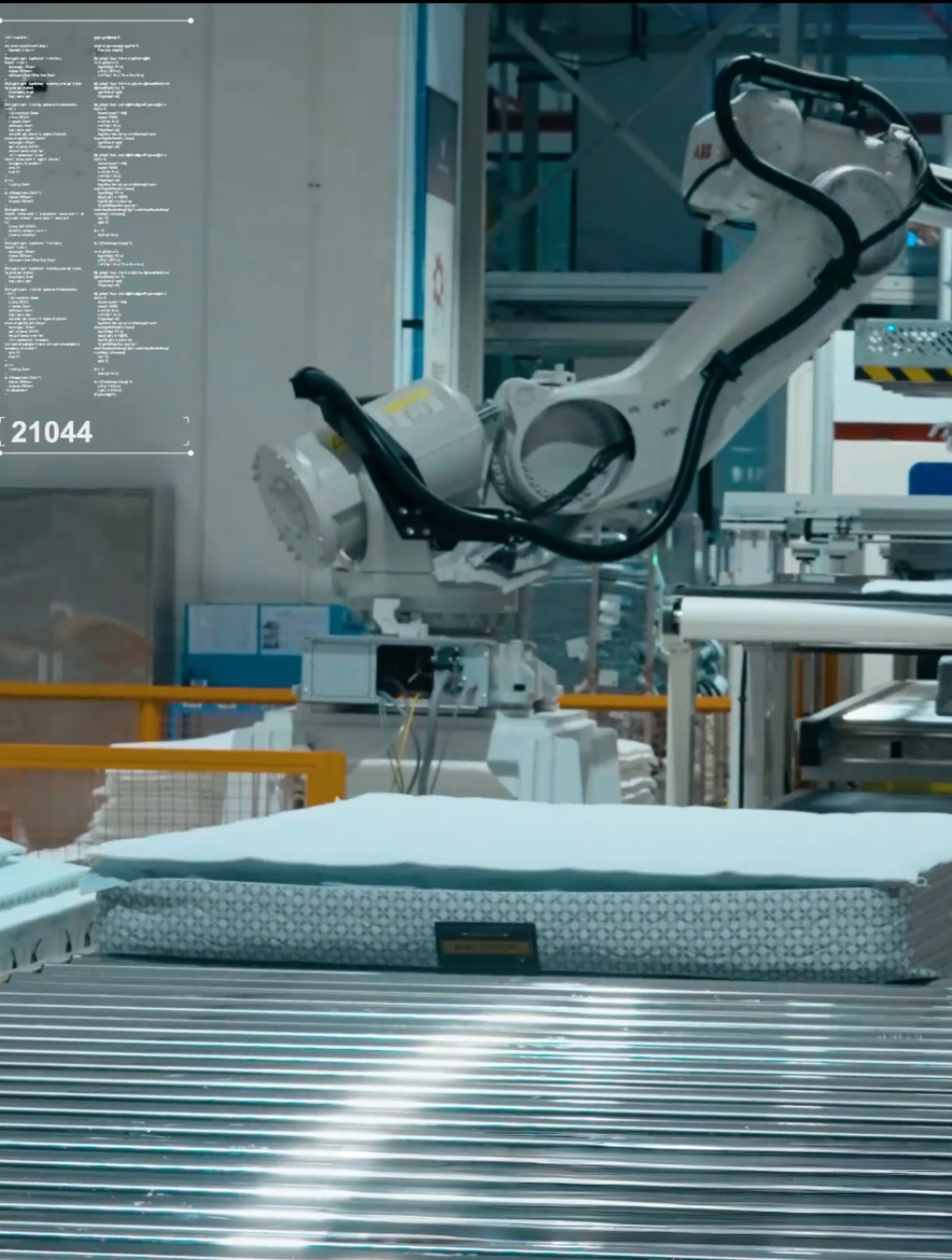
Volume matters when a brand needs repeat supply across markets. Yet a large production footprint alone cannot prove that every mattress in an order matches the sample. The control question is how approved materials, dimensions, assembly details, labels, and packing instructions reach the production line and inspection team. For each model, the mattress manufacturer links approved production details to the corresponding recorded inspection results.
Suisin Furniture reports a 200,000 m² production base, standardized production, quality-control systems, and exports to more than 60 countries. These facts can guide a capability discussion about volume and international experience. They do not establish a universal lead time or guarantee performance in every destination. A buyer can connect the reported scale to its own order by requesting production milestones and the inspection criteria for each proposed version.
Consistency includes change control. When a material is unavailable or a design revision is requested, the brand must know whether the old specification is still being made and which orders receive the new one. Samples, version identifiers, and written approvals prevent an unnoticed shift from becoming a market-wide issue. The larger the distribution network, the more valuable that traceability becomes.
Make Logistics a Design Input
Packaging is often considered after the mattress is finished, although it affects shipping volume, handling, and storage. Some constructions can use compressed packaging; others require a different method. A China mattress manufacturer should evaluate compatibility with the selected model and provide the actual packed dimensions. Arrival condition and unpacking capacity decide whether a compact carton serves the destination; saved transport space alone cannot settle that question.
Global brands also need accurate model identification across cartons, shipping documents, and warehouse systems. A mismatch between the label and the internal construction can be harder to detect after distribution than at the factory. Packing and final inspection therefore belong to the same product record as the support core and cover.
The future-facing choice is not one packing format for every market. It is the ability to compare formats against product performance and the delivery route. A brand may use compression for one suitable collection while shipping another conventionally. The rationale should be documented so later orders do not inherit a method merely because it worked for a different model.
Market differences may include bed dimensions, labeling, and how stock moves from port to warehouse. A global brand can record these as destination-specific requirements attached to the same core model. That record helps the manufacturer avoid confusing a local variation with a design revision meant for every market. It also makes later replenishment more precise.
Keep Expansion Verifiable
As a brand enters more markets, the manufacturing relationship needs evidence that travels with each version: a specification, sample reference, change history, inspection plan, and packing instruction. A mattress manufacturer that can connect these records to production scale gives the brand a practical basis for expansion.
Suisin Furniture‘s combination of development options, reported production resources, export experience, and suitable compressed packaging illustrates the capabilities global brands may seek. Their value is decided order by order. Future manufacturing will be judged by whether differentiated mattresses remain identifiable and reproducible from the design table to the receiving warehouse.
