Ask five different campers to define their ideal outdoor setup, and their answers will inevitably diverge based on their method of transportation. For a backcountry hiker carrying everything on their back, camping gear centers on extreme weight reduction, compact pack volume, and minimalist functionality.
For a traveler driving directly to a campsite, the priorities invert completely: standing headroom, expansive living area, multi-day weather protection, and residential-style comfort take precedence.
While both activities take place outdoors, equipment engineered for car-supported travel solves fundamentally different problems than gear built for human-powered trails. Mixing the two—bringing delicate, ultra-light backpacking gear on a vehicle expedition, or attempting to carry heavy vehicle-based shelters on foot—results in either compromised comfort or unnecessary physical strain. Understanding these architectural differences ensures that campers select the right tools for their specific style of travel.
Two Approaches Built Around Distinct Transportation Constraints
Traditional backpacking equipment operates under a strict design constraint: every single gram must be carried by human force over long distances and rough terrain. Consequently, every manufacturing decision—from thin fabric deniers and skeletal aluminum poles to scaled-down zippers—is evaluated through the lens of weight reduction first and interior volume second.
Conversely, modern car camping supplies capitalize on the payload capacity of an automobile. When a vehicle handles the weight, gear designers can prioritize structural durability, spacious ergonomics, and advanced climate features. Neither design philosophy is superior; they are simply engineered for different transport constraints. The ideal setup depends entirely on the distance between the vehicle and the final camp spot.
The Weight and Durability Trade-Off
The split between traditional backpacking gear and vehicle-focused gear is most evident in total structural weight. A single-person trail tent must stay under a few pounds to remain practical on a multi-day hike. Vehicle-integrated shelters, however, operate without these tight weight restrictions.
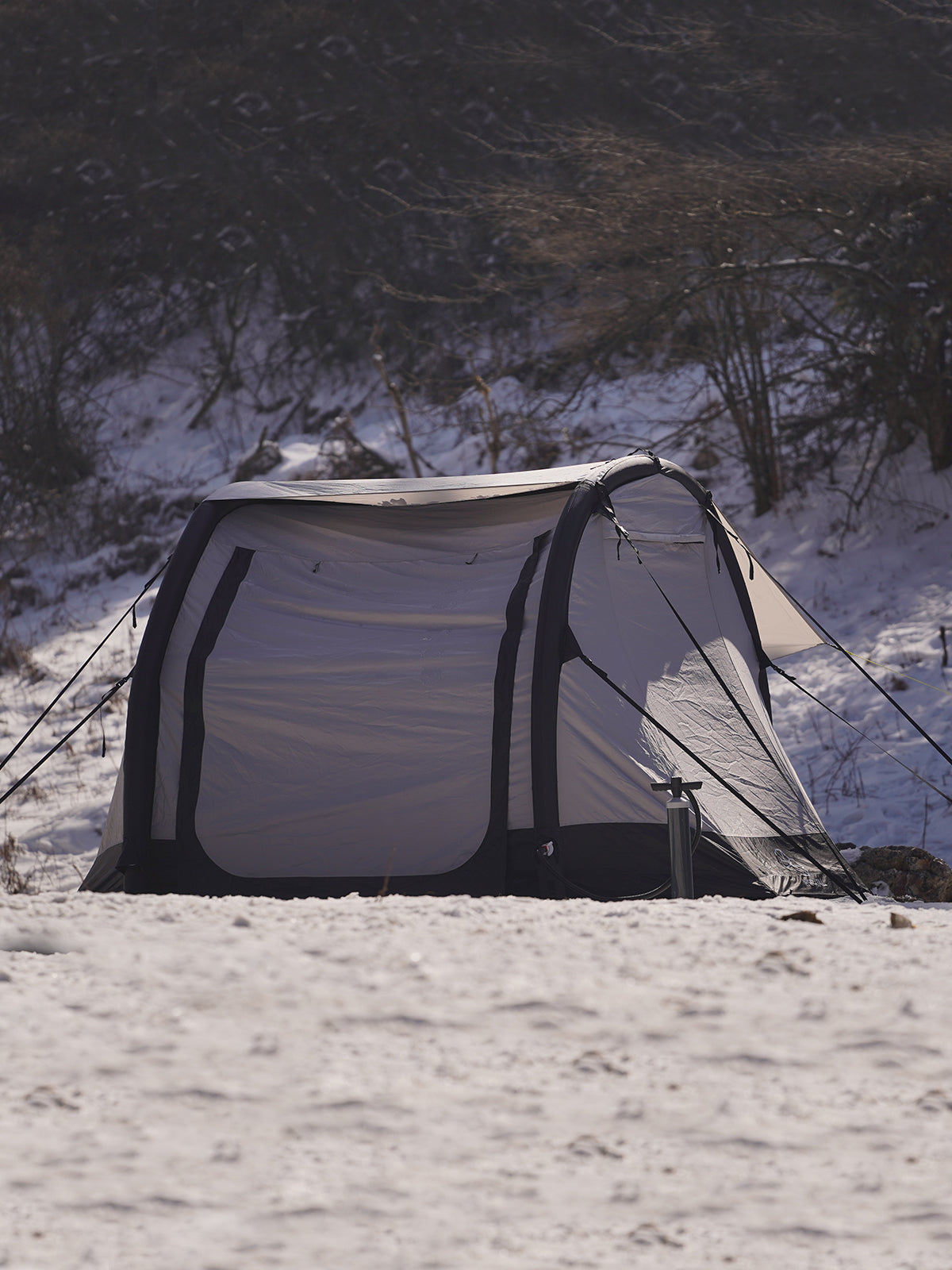
THECATAL illustrates this vehicle-centered approach with the Boundary Series Smart Shell. Weighing approximately 26 pounds (12 kg), the Smart Shell would be far too heavy for backpacking, but its weight is negligible when stowed inside an SUV or mounted to a tailgate. This additional weight allowance translates directly into enhanced durability and stability.
Constructed from durable silicon-coated ripstop 70D nylon, the Smart Shell features a vehicle-to-tent connection tunnel designed to connect with both electric and gasoline vehicles.The increased material density and robust connection framework ensure that the shelter remains stable and weather-sealed through repeated four-season use.
Interior Volume and Architectural Layouts
Interior volume represents another significant division between traditional trail gear and car camping equipment. Backpacking tents minimize footprints to conserve heat and material weight, often restricting headroom to a low sitting position. Vehicle-supported shelters, by contrast, focus on maximizing usable square footage and vertical clearance to create multi-functional living areas.
This spatial expansion is clearly demonstrated in THECATAL’s Boundary Series Magic Fort. Designed as a duplex-style, multi-room basecamp tent, the Magic Fort provides approximately 484 square feet of interior space. This vast footprint allows large groups to establish distinct zones for sleeping, gear organization, and communal activities during extended stays at fixed mountain locations.
In addition to its generous floor plan, the Magic Fort integrates heavy-duty climate controls that are rarely found in traditional light shelters. The tent features a fully waterproof, windproof, snow-proof, and heat-resistant construction, complemented by two-way zippers on both sides that allow compatibility with external heating devices. Dedicated ventilation ports actively purge exhaust gases while a heater is running, creating a safe, climate-controlled sanctuary during cold-weather expeditions. Such heavy-duty components and spacious dimensions are specifically built for vehicle-supported basecamps, where comfort over multi-day trips outweighs packability.
Weather Protection Across Categories
Although weight and space specs diverge sharply between traditional trail gear and vehicle-based equipment, weather resistance remains a mandatory baseline across both categories. High winds, torrential rain, and accumulating snow impose equal stress on a canopy regardless of how it reached the campsite.
Premium car camping equipment matches or exceeds the weatherproofing standards of high-end mountaineering gear. Heavy-gauge silicone-coated fabrics, seam-taped waterproof membranes, and reinforced guy-out systems allow large vehicle shelters to withstand severe storms without leaking or collapsing. The primary difference lies in how weather resistance is achieved: traditional backpacking gear relies on minimal, high-tension geometry to shed rain, while vehicle-based shelters utilize heavy-duty fabrics and sturdy framing to provide storm resistance across a much larger living space.
Matching Gear Categories to Trip Objectives
Ultimately, car camping supplies and traditional backpacking gear are not competing options—they are specialized tools tailored to distinct transportation methods. Trips that remain anchored to an automobile benefit immensely from the standing headroom, multi-room layouts, and integrated climate controls offered by heavy-duty vehicle shelters. Conversely, long-distance foot travel requires lightweight, compact gear that minimizes physical fatigue.
Evaluating equipment against the actual mechanics of a trip—vehicle-supported versus human-powered—provides the clearest starting point for assembling outdoor gear. By aligning shelter choice with transportation capability, travelers can enjoy reliable protection, maximum functionality, and effortless comfort wherever their journey leads.
