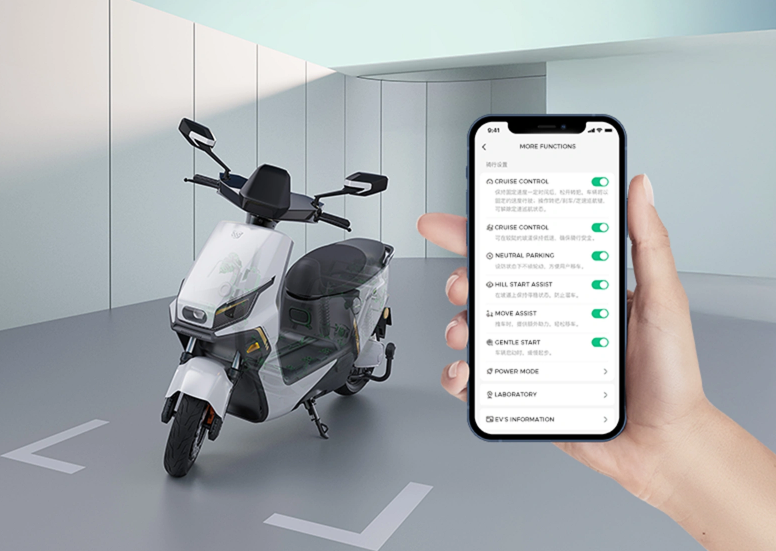
Connected functions, adjustable power, and electronic riding aids can make an electric scooter more versatile, but not every feature adds meaningful value for every customer. Commuters may care most about predictable acceleration and easy daily operation, while delivery riders often prioritize practical range, reliability, and manageable running costs.
Dealers must distinguish useful technology from features that add complexity without solving a real problem. A smart electric scooter should offer functions that match its intended use, remain straightforward to operate, and deliver benefits that customers can understand. LUYUAN operates in the electric two-wheeler market, where this distinction matters to distributors building a product range for different riding needs.
Match Power Control to Different Riding Scenarios
Power adjustment allows a rider to select different response characteristics according to road conditions and personal preferences. A lower-power mode may soften acceleration and help make urban traffic easier to manage, while a more responsive setting can suit situations requiring stronger acceleration, subject to the vehicle’s limits. These modes do not automatically increase battery capacity or extend range in every situation; actual energy consumption depends on speed, load, terrain, temperature, and riding behavior.
Dealers should examine how power modes affect the overall riding experience rather than relying on the number of settings listed in a brochure. Useful questions include whether the selected mode remains active after restarting, how the display communicates the current setting, and whether changes can be made without distracting the rider. Clear controls matter because complicated menus may discourage customers from using functions intended to improve convenience.
Different customer groups also need different performance characteristics. Urban commuters may value smooth starts and predictable response in congested streets, whereas riders covering longer distances may prioritize consistent performance and efficient energy use. An electric scooter manufacturing company should be able to explain the intended use of each configuration and provide specifications that help distributors match vehicles to local demand. Dealers can then position models around genuine use cases instead of treating maximum power as the only measure of capability.
Connectivity and Security Features Worth Paying For
Smart connectivity can make ownership more convenient when it solves a recognizable problem. App-based unlocking reduces reliance on physical keys, while GPS positioning can help owners locate a parked vehicle. Movement alerts and electronic fencing may also support theft awareness by notifying users of unexpected movement or activity outside a defined area. However, dealers should clarify whether these functions require a subscription, mobile data, compatible smartphones, or additional regional software development.
Security features also need practical testing. GPS accuracy can vary with satellite visibility and surrounding buildings, while an alert is only useful if it reaches the owner promptly. Electronic fencing should be assessed for location accuracy, notification settings, and ease of use. A smart electric scooter should make these functions accessible without requiring customers to navigate confusing interfaces or rely on services that are unavailable in their market.
Connectivity can create additional responsibilities for distributors, particularly when products are sold across different countries. Dealers should ask about app language support, software updates, data privacy, technical troubleshooting, and the availability of regional customer service. LUYUAN’s official smart-experience information describes features including Bluetooth and NFC unlocking, GPS positioning, movement alerts, electronic fencing, and adjustable riding modes. These capabilities are useful evaluation points, but their availability may vary by model and market.
Assess Model Specifications and Dealer Support
A feature list becomes commercially useful only when it can be connected to a specific configuration. The S90 illustrates this distinction: LUYUAN lists the S90-Li2 with a 3,000 W rated motor, a 72 V 48 Ah LMO battery, a maximum speed of 80 km/h, and a stated charging time of five to six hours. Its product page also describes app-based unlocking, intelligent controls, and GPS positioning, while noting that app adaptation may require additional development in individual countries. Dealers should verify which functions are included in the exact version under consideration before preparing quotations or promotional materials.
A wider portfolio can help distributors serve different customer groups, but the range needs to be supported by clear product documentation. An electric scooter manufacturing company should provide reliable information about model differences, component specifications, packaging, production schedules, warranty conditions, and spare-parts supply. For overseas partners, certification documents and local compliance requirements are equally important. Written confirmation of these details helps prevent misunderstandings between catalog descriptions, purchase orders, and the vehicles delivered.
Commercial support should also be evaluated beyond the first shipment. Training materials, repair guidance, replacement-part ordering, and clear warranty procedures can affect the total cost of operating a dealership. Prospective partners should ask how technical questions are handled, what marketing resources are available, and whether the company supports regional distribution development. LUYUAN offers an official product catalog and dealer partnership page, which provide starting points for reviewing its portfolio and discussing cooperation requirements.
Conclusion
Useful technology is defined by the problems it solves, not by the number of electronic functions listed in a brochure. Adjustable power, practical security tools, accessible controls, and dependable after-sales support can each contribute value, provided they match customer needs and work reliably in the intended market. A smart electric scooter deserves serious consideration when its features improve daily use without creating unnecessary costs or service complications.
Dealers comparing suppliers should verify model-specific capabilities, test the user experience, and clarify regional support before making a wholesale commitment. LUYUAN provides an electric two-wheeler portfolio for prospective distributors to explore, while careful market research and direct technical discussions can help determine whether its products fit a particular business strategy.
