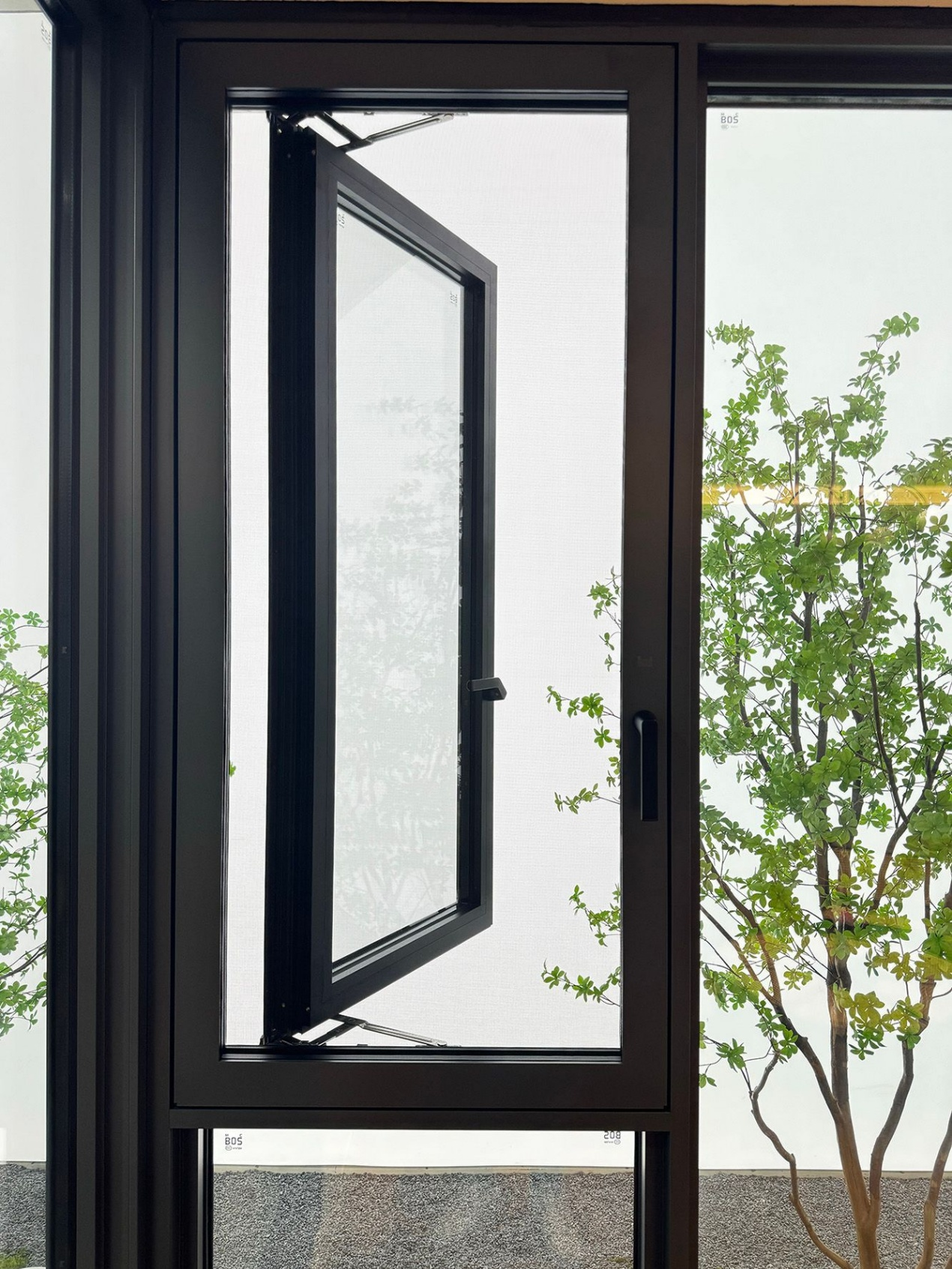
A casement window depends on several connected components to open, close, and lock correctly. When the handle becomes difficult to turn or the sash no longer moves as expected, the cause may lie in the drive mechanism, hinges, or their connections. Replacing parts without identifying the source of the problem can lead to unnecessary work or compatibility issues. The CMECH outswing casement window hardware range provides a useful example of how handles, spindle drive gearboxes, and friction hinges work together. Understanding these components helps window fabricators, installers, and maintenance professionals identify suitable replacements.
How the Casement Window Operating Mechanism Works
An outswing casement window opens outward on hinges. Its handle connects to a spindle drive gearbox, which transfers rotational movement into the operating mechanism. The hinges guide the sash during movement, while the locking components help secure it when closed.
Because these parts perform different functions, similar operating symptoms can have different causes. A loose handle may involve its fixation, while a handle that turns without moving the mechanism may indicate a problem with the drive connection. Resistance during opening can also warrant an inspection of the hinges and sash alignment.
The relationship between these components matters when assessing casement window parts. Identifying the affected part before ordering a replacement helps avoid treating the entire system as though it has one interchangeable mechanism.
Handles: Checking Fixation and Movement
The handle is the component that the user operates directly to control the window mechanism. Its connection to the drive mechanism must match the intended hardware configuration. When a handle feels loose, the mounting structure and engagement should be checked before the handle is replaced.
CMECH’s Master Series outswing casement hardware with an integrated fly screen system offers Milan and Venice handle options. Both feature a triangular fixation structure designed to provide stable mounting and smooth operation. The handle design is part of the overall system, so matching its appearance alone is insufficient when selecting a replacement.
A useful inspection begins with the handle’s mounting position and its connection to the spindle drive. If the handle remains firmly attached but the mechanism does not respond correctly, the gearbox and related connections may require further assessment. This distinction helps technicians determine whether the issue concerns the handle itself or another part of the operating assembly.
Spindle Drive Gearbox: The Main Component to Inspect
The spindle drive gearbox transfers movement from the handle to the window’s operating mechanism. Wear, incorrect positioning, or an incompatible drive connection can affect operation. When assessing faults, technicians should compare the existing gearbox dimensions and connections with the intended replacement rather than relying on a general visual match.
CMECH specifies a zinc-alloy, precision-cast gearbox for its Master Series with fly screen. The mechanism has a stated torsional resistance of 25 N·m and an anti-drift nut that provides 12.5 mm of bidirectional adjustment. It has also been tested for 30,000 open-and-close cycles.
These details help buyers distinguish between drive mechanisms with different construction and adjustment features. They do not mean that every difficult-to-operate window requires a new gearbox. The handle connection, hinge movement, and sash alignment should be considered before a replacement decision is made.
Friction Hinges: When the Problem Is Not the Operator
Friction hinges guide the sash as it opens and closes, providing support during movement. If a window feels unusually resistant or does not move evenly, the hinges and their connections should be inspected alongside the operator.
CMECH’s Master Series with fly screen uses a C-groove friction hinge made from 304 stainless steel, with a 4 mm load-bearing arm and a stated capacity of up to 60 kg. Its design includes a triple safety linkage and a stopper intended to support controlled operation.
These specifications are relevant when selecting casement window operator parts, because replacing the drive mechanism alone may not resolve a problem originating in the supporting hardware. The hinge must also match the frame profile and the applicable sash requirements. A component’s load capacity should not be considered separately from the dimensions and configuration of the complete window.
CMECH Master Series: Matching Parts to the Window
The CMECH Master Series outswing casement hardware with integrated fly screen brings together handles, a spindle drive gearbox, friction hinges, and fly screen hinges. The fly screen hinge is available with 90°, 165°, and 180° opening angles. The 90° and 165° versions can be paired with quick-release screw packs to facilitate screen removal and cleaning.
The specified application range for the Master Series with fly screen includes sash widths of 400–750 mm and sash heights of 300–1,800 mm, with a maximum load-bearing capacity of 60 kg. The listed center distances for the spindle drive gearbox are 11, 13, 22, 25, 28, 30, and 35 mm.
These parameters provide a reference for checking whether the hardware suits the existing window. They should not be applied automatically to every CMECH casement system, since other configurations may have different specifications. The company also offers a separate outswing casement window hardware solution with its own applicable dimensions and component options.
Practical Checks Before Ordering Replacements
Before purchasing replacement components, record the window’s sash dimensions, frame groove, handle connection, gearbox center distance, and hinge arrangement. Compare these details with the intended product configuration. If the window includes an integrated fly screen, confirm that the replacement hardware accommodates that arrangement.
CMECH provides several component options within its window hardware range, but compatibility still depends on the specific installation. The distinction between a complete hardware Solution and an individual Series is also important: a Solution describes the overall system, while a Series identifies a product line within that system.
For maintenance teams and fabricators, keeping a record of installed components and their dimensions can make future repairs easier to plan. A systematic inspection also helps distinguish a single damaged part from a wider alignment or hardware issue.
Conclusion
Diagnosing casement window faults requires understanding how handles, spindle drive gearboxes, and friction hinges interact. Checking the symptom, connection points, frame profile, and relevant dimensions helps narrow down replacement options. CMECH’s Master Series provides defined component specifications for outswing casement windows with integrated fly screens, giving buyers a practical reference when comparing compatible parts. Careful identification before ordering can reduce mismatches and help maintain the intended operation of the window.
