Households with two electric vehicles face a practical charging question: how can both cars charge safely without creating unnecessary electrical stress? A dual-port charger can reduce the need for separate wall units, but installation still needs to match local wiring rules, circuit capacity, connector standards, and outdoor protection requirements. For home fleets, compliance is not only about the charger itself. The electrical system around it matters too.
A dual EV charger for home use should be selected with the property’s available power in mind. Buyers need to review the distribution board, circuit rating, cable size, earthing method, and charging schedule. If both vehicles often charge at the same time, simultaneous output becomes a key planning factor. Clear load planning helps avoid oversized equipment or a setup that places excessive demand on the site.
Check Power Capacity Before Installation
The first step is to compare charger output with the power that the building can support. A unit with two connectors may offer a high combined rating, but the practical charging rate depends on the upstream electrical supply. Homes with limited spare capacity may need controlled charging schedules or load management rather than unrestricted full-power charging.
For a dual port EV charger, installers should calculate the expected current when both connectors operate together. Two vehicles charging at once create a different load profile from one vehicle charging alone. The circuit breaker, cable route, and distribution equipment should be selected for the real operating condition rather than the charger nameplate alone.
Local electrical codes may define requirements for dedicated circuits, residual current protection, surge protection, isolation, and grounding. Product certification helps, but site compliance still depends on correct electrical design and installation practice.
Connector Standards and User Access
Connector compatibility is another basic compliance issue. For European-style applications, Type 2 connectors are widely used for AC charging. A charger intended for a two-vehicle household should match the inlet standards of both vehicles and the market where it will be installed.
Access control can also be useful in shared residential settings. RFID cards and mobile applications allow users to control who can start charging.
For buyers comparing a dual EV charger for home, communication options should also be reviewed. Wi-Fi, 4G, Bluetooth, and Ethernet can support different installation conditions. The suitable choice depends on network availability, monitoring needs, and whether the charger needs to connect with a local or cloud-based management platform.
Outdoor Protection and Equipment Placement
Residential chargers are often installed in garages, carports, driveways, or semi-open parking areas. Enclosure protection therefore affects long-term operation and installation planning.
An IP rating gives buyers a clearer reference for environmental protection. IP54 equipment is protected against limited dust ingress and splashing water from different directions. It can fit many sheltered residential and commercial locations, although installers still need to consider drainage, direct rainfall exposure, ventilation, and mounting position.
Cable routing also deserves attention. Charging cables should not create trip hazards or be stretched across vehicle paths. Floor-mounted equipment needs enough clearance for both cars to connect without crossing cables around wheels or doors.
How One Product Fits This Use Case
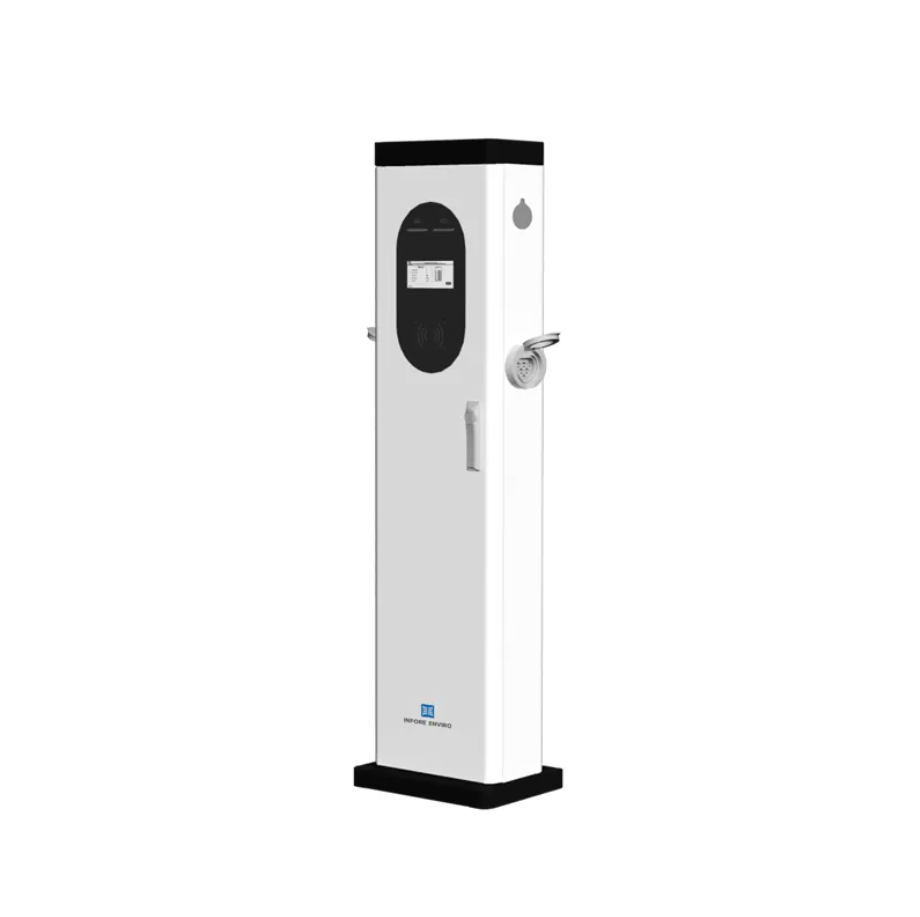
For projects that need dual-vehicle charging from one floor-mounted unit, the Carina series provides an example of how these requirements can be combined. The 14kW/42kW Carina series Commercial Floor-mounted model is offered in 14kW to 42kW power options and uses two Type 2 charging guns.
The INFORE ENVIRO unit includes a 5-inch touchscreen HMI, APP and RFID card access, plus 4G, Wi-Fi, Bluetooth, and Ethernet communication. Its IP54 enclosure supports installation in suitable residential and commercial environments where dust and splash protection are required.
Another relevant feature is OCPP dual-platform support. This allows the charger to communicate with compatible management systems using a standard protocol. The dual-gun design supports simultaneous charging, so two vehicles can connect to the same unit without requiring two separate chargers.
Safety Review Before Commissioning
Before the charger enters regular use, the installer should verify protective devices, cable connections, grounding, communication settings, and connector operation. Charging both ports during commissioning can help confirm that the electrical system behaves correctly under the expected load. The test should also confirm stable connector engagement and normal status reporting.
Users should also understand how the charger responds to faults or communication loss. Clear operating instructions, visible status information, and controlled access can reduce confusion during daily use.
A dual port EV charger can simplify charging for households with two electric vehicles, but installation should still be treated as electrical infrastructure rather than a plug-in appliance. Product features, site capacity, and local codes need to work together.
Practical Compliance for Home Fleets
For home fleets, the main goal is to match charging demand with safe site capacity. Connector type, simultaneous charging, environmental protection, user access, and communication all affect how well the system fits daily use.
The Carina series from INFORE ENVIRO shows how dual charging, Type 2 connectors, multiple communication methods, OCPP support, and IP54 protection can be combined in one floor-mounted format. Buyers still need to confirm local electrical requirements and installation conditions before deployment. With these checks in place, a dual-charger setup can support two-vehicle households with clearer control and practical operation.
