Managing a large warehouse, logistics center, or industrial facility requires accurate data and efficient tracking. Manual checks take time, while barcode systems often require direct visibility of each label. RFID technology offers another approach by allowing multiple tagged items to be identified through radio waves. However, the return on investment depends on coverage, installation costs, reading accuracy, and daily operating needs. Choosing suitable equipment helps businesses control expenses while improving inventory visibility and workflow efficiency.
Why Coverage Matters in Large Facilities
Large facilities often contain thousands of tagged items across shelves, storage zones, loading docks, and production areas. A system with limited coverage may require additional readers and antennas to reach every location. This increases hardware costs, cabling work, installation time, and maintenance demands. Businesses should therefore assess the required reading area before deciding how many devices to install.
RFID Antennas play an important role in this assessment. Their performance affects how radio signals reach tags and how reliably readers collect data. Antenna gain, polarization, mounting height, tag orientation, and surrounding materials all influence practical coverage. A wider reading area can reduce the number of installation points, provided the system still identifies the intended tags accurately.
How Wider Coverage Can Reduce Costs
The initial purchase price represents only one part of an RFID project’s total cost. Businesses also need to account for brackets, power supplies, network connections, installation labor, software integration, and future servicing. Adding equipment to cover missed areas can increase the original budget. Planning coverage carefully helps purchasing teams estimate the full investment instead of comparing hardware prices alone.
A long range RFID antenna can support larger reading zones when the application and environment permit. Fewer reading points may reduce cabling and installation requirements. However, extended range is not automatically more economical. Excessive coverage can cause unwanted reads from nearby zones, while metal structures and liquid containers may affect signal behavior. Site testing helps determine whether broader coverage produces a real operational benefit.
Calculate the Return Beyond Hardware Prices
Return on investment should reflect measurable changes in daily operations. Warehouse managers can compare the time spent on inventory counts before and after installation. They can also track receiving speed, picking errors, misplaced assets, and labor hours used for routine checks. These figures provide a practical basis for estimating savings and identifying areas where automation makes a difference.
A useful calculation compares the initial project cost with the expected annual savings. For example, a warehouse may estimate reductions in manual scanning time and inventory discrepancies. The calculation should also include software fees, equipment maintenance, staff training, and replacement costs. Realistic estimates help decision-makers avoid overstating financial benefits and compare different system designs on consistent terms.
Match Equipment to the Reading Environment
Reading distance should not be the only selection criterion. Warehouses with narrow aisles may need focused coverage to avoid reading tags in adjacent locations. Open storage yards may benefit from broader coverage, but weather exposure and vehicle movement introduce other considerations. Production lines also require attention to conveyor speed, tag placement, and the distance between tagged products and the reader.
When comparing RFID Antennas, buyers should review frequency compatibility, gain, polarization, installation options, and the required read zone. Circular polarization can help when tags appear at different orientations, although performance still depends on the tag and environment. Testing representative products under actual operating conditions helps reveal weak spots before a full deployment. It also reduces the risk of buying equipment that does not suit the site.
Consider Integrated Readers for Simpler Deployment
Some projects can reduce installation complexity by combining the reader and antenna in one device. This arrangement can simplify equipment selection and reduce the need to coordinate separate components. It may suit compact workstations, access points, production lines, or designated warehouse zones. Buyers should still check interface requirements, network layout, mounting space, and the number of read points needed.
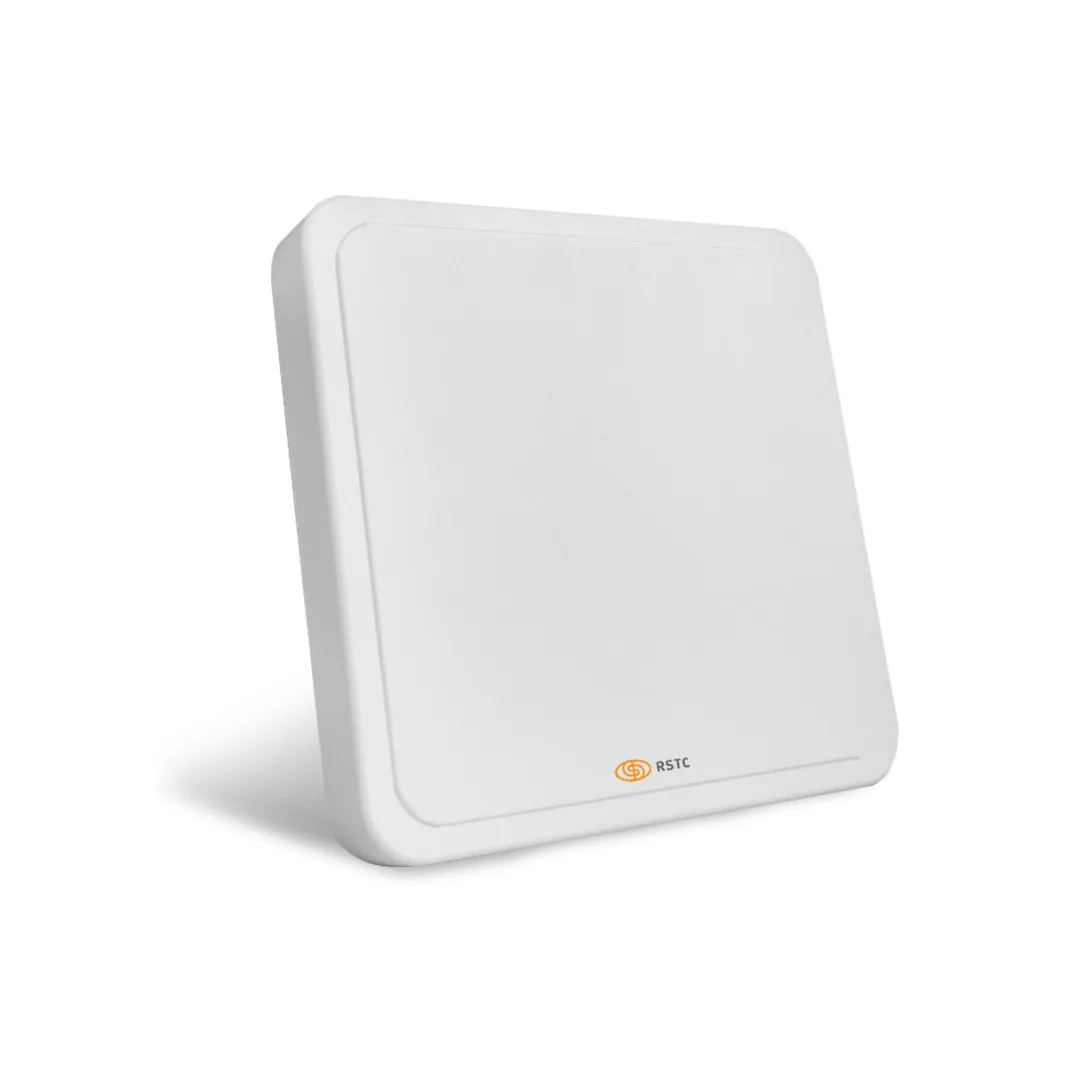
For these applications, RSTC offers the RS-PI09CA01 Middle Range UHF RFID Integrated Reader With Built-In 9dBi Circular Polarization Antenna. Its stated reading range is up to 8 meters. The unit supports 902–928 MHz for FCC applications and 865–868 MHz for CE applications. It includes standard RS-232 and 10M/100M Ethernet interfaces, with PoE available as an option.
Evaluate Performance Before Expanding
The RS-PI09CA01 uses an Indy R2000 RFID chip and supports online firmware upgrades. It is designed for applications such as warehouse and logistics management, supply chain operations, asset tracking, personnel attendance, vehicle parking access control, and intelligent weighing. The model also supports multi-reader operation in intensive environments. Buyers should confirm deployment conditions and compatibility with their existing systems before selecting it.
A long range RFID antenna may offer greater value when it reduces the number of reading points without sacrificing identification accuracy. An integrated reader may be more practical when installation simplicity and compact equipment matter more than maximum coverage. Pilot testing helps compare these options using read rates, missed reads, installation effort, and operating costs. The results can guide phased deployment and future expansion.
Build a Cost-Effective RFID Plan
A sound investment begins with a site survey, a clear list of operational requirements, and a realistic budget. Businesses should map reading zones, test representative tags, and identify possible interference from metal or other materials. They should also define performance targets before purchasing equipment. This makes it easier to assess whether wider coverage will reduce total costs or create unnecessary reading overlap.
For large-area projects, RSTC provides an integrated reader option that buyers can evaluate against their application requirements. The final choice should reflect verified site performance, total ownership costs, and future operating needs. Careful planning can help businesses improve tracking efficiency while keeping infrastructure spending under control. The goal is not simply to cover more space, but to obtain reliable data at a sustainable cost.
