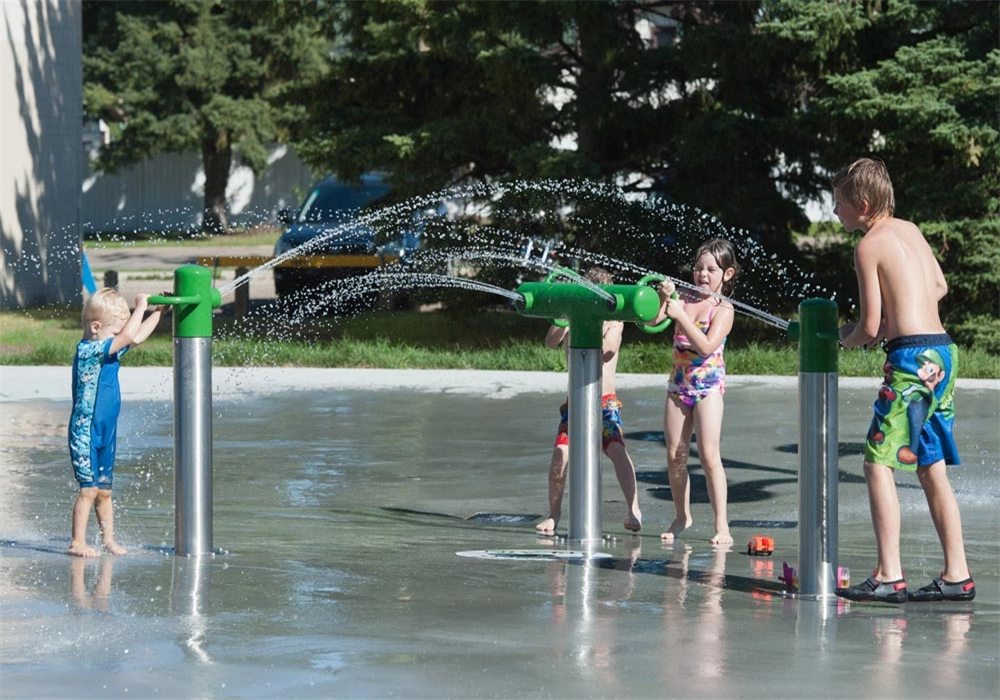
Accessible splash pad design is easiest to get right when it is treated as a layout and specification issue from the first drawing. Routes, surfaces, spray placement, and seating all interact, and fixing any of them after construction is costly. Jinchao approaches children’s aquatic facilities with these coordinated requirements in mind, using standards as a starting point rather than a final checklist.
Rethink Accessibility Beyond the Entrance
Accessibility begins before a child reaches the first water feature. Routes from parking areas, entrances, seating zones, changing facilities, and nearby pathways should connect naturally with the play area. An accessible splash pad should avoid abrupt level changes and provide enough maneuvering space for mobility devices without separating children who use them from the main activity.
Surface transitions deserve particular attention. Wet environments can make small changes in height more noticeable, while drainage grates or poorly positioned joints may interrupt movement. ADA splash pad design should address route widths, accessible approaches, surface conditions, and other applicable requirements as part of the overall site layout rather than treating accessibility as an isolated compliance exercise.
The placement of interactive features can also influence participation. Some children may prefer observing before joining, while others may move directly toward water jets. A successful inclusive splash pad design can provide quieter edges, open circulation areas, and multiple ways to interact with water, giving families greater flexibility without dividing the play space into separate zones.
Create Multiple Ways to Participate
Not every child interacts with water in the same manner. Some may enjoy direct spray, while others prefer gentle streams, rotating elements, or activities that allow them to control the pace of interaction. A well-planned accessible splash pad can include different intensities and heights so that participation does not depend on one physical ability or play style.
Equipment selection should reflect that variety. Jinchao’s Kids Aqua Play facilities use 304 stainless steel and can rotate while producing water in different forms. The equipment can be adapted to the available area, with customized shapes, colors, and themes also possible for venues seeking a connection with local culture or an established IP concept.
Water delivery deserves the same level of consideration as physical access. High-pressure jets positioned across narrow routes may create unnecessary barriers, whereas carefully distributed spray features can preserve clear movement corridors. In ADA splash pad design, water effects, equipment locations, drainage, and accessible circulation work better when evaluated together.
Check Compliance Before and After Installation
Accessibility requirements vary by country and project type, so the applicable standard should be named at the start of design and written into the equipment specification. Route widths, slopes, surface firmness, and reach ranges can then be checked against the drawings before anything is ordered.
Compliance should be checked again on site. Measured slopes, drain grate openings, and surface transitions sometimes differ from the drawings after concrete is poured, and small deviations can matter in a wet environment. A short inspection with a measuring tape and level before opening catches most of them.
Records complete the process. Keeping drawings, test notes, and photographs of the finished routes gives operators evidence of what was built and a baseline for later maintenance, renovations, or audits.
Turn Standards Into Practical Design Decisions
Regulatory requirements provide an important reference point, but successful accessibility also depends on how people actually move through the site. Designers should observe likely travel paths, identify potential conflicts between play and circulation, and examine whether seating or equipment placement unintentionally restricts access. ADA splash pad design becomes more meaningful when technical requirements are translated into everyday user experience.
Drainage provides another example. Water should move away from active routes without creating difficult crossings or unnecessary surface changes. Grates, slopes, and collection points need to be coordinated with accessible pathways, while the surface should remain suitable for both wet-foot traffic and mobility devices.
Project teams can also use testing to identify issues before opening. Mock circulation routes, wet-surface inspections, equipment observation, and feedback from accessibility specialists can reveal problems that drawings alone may not show. A qualified water park manufacturer can contribute practical knowledge about equipment placement and aquatic construction, while accessibility decisions should remain grounded in applicable standards and the needs of actual users.
Conclusion
Inclusive aquatic recreation is not created by adding one accessible route after the main layout has been decided. It comes from coordinating routes, equipment, surfaces, drainage, and seating from the beginning, then confirming on site that what was built matches what was specified.
Thoughtful water park manufacturer involvement can help connect equipment planning with site realities, while professional accessibility review provides another important layer of guidance. Jinchao approaches children’s aquatic facilities with customizable equipment and site-oriented planning, giving project teams options for adapting play areas to different venues. A carefully developed water park manufacturer partnership, combined with accessibility-focused design decisions, can turn a splash pad into a space where more children can participate comfortably, independently, and alongside their families.
